The 150-megawatt Solar Generation 2 photovoltaic power plant, located in Imperial County (California), was recently bought by First Solar, Inc. The construction of this solar power plant is planned to start this year and is set to be completed next year. Once completed, the new photovoltaic solar power plant is to produce enough electricity to power more than 60,0000 homes while displacing more than 115,000 metric tons of carbon dioxide per year. This solar power plant will estimably save around 93,000 metric tons of water per year.
The San Diego Gas and Electric Company (SDG&E) has agreed to purchase the electrical output under a 25-year power purchase agreement. Once this agreement is started, the photovoltaic solar plant is expected to provide over 800 construction jobs within Imperial County, which has been overcome with high unemployment.
"We are very pleased to help SDG&E meet its clean energy goals and provide clean, reliable, renewable power to their customers," said Dana Diller, First Solar Vice President of U.S. Business Development. "We are also proud to once again bring the economic benefits of utility-scale solar development to Imperial County, where both county officials and the Imperial Irrigation District, with which this plant will interconnect, have been extremely supportive."
The financial details of the new purchase is still unknown but it does include 40 megawatts of solar modules that the project had previously purchased from another supplier. First Solar, Inc., is actually planning to integrate those modules into construction and make up the difference with their own modules in order to complete the construction of the power plant. In addition, First Solar will be providing project development, engineering, procurement and construction (EPC), and grid integration services.
Sunday, April 7, 2013
Saturday, April 6, 2013
New Bill Could Help Georgia Grow as a Solar Market
Local Public Service Commissioner Lauren "Bubba" McDonald, Jr., had noted that "Georgia is the third best state for solar energy in the United States but ranks 35th in actual solar installations, even the cost of panels have decreased 33%." In fact, the state has the same solar potential as central Africa or India, with most areas of the state generating between 4.92 and 5.21 kilowatt hours per square meter per day.
With all this to be considered, Georgia represents an unmarked opportunity to grow. Therefore, it's no surprise that Georgia Solar Utilities company is backing the "Rural Georgia Economic Recovery and Solar Resource Act of 2013." This bill is enabled to create a unique financing model for solar energy, wherein third parties (like Georgia Solar Utilities) can submit proposals to the Public Service Commission for financing and aggregating solar energy.
Some of the details enlisted in the bill have the capacity to help Georgia grow in terms of the solar market. The statute clears roadblocks like interconnection and grid access for generating assets and this entire program is on an opt-in basis. Competitive bidding on construction and installation will be creating market incentives to help lower the soft costs of solar panel installations. Since photovoltaic and solar farms are covered under the statute, neighborhood homes in Atlanta could have solar power on their roofs while unused fields in the country can yield 30-megawatt solar farms. If the sun decides to shine in either place, ratepayers in both areas reap the benefits as well as this geographical distribution also brings about less variability.
"The world has changed for the economics of solar in Georgia, but we're stuck with 40-year-old laws that block us from taking advantage of it," said Robert Green, CEO of Georgia Solar Utilities. "So we're offering a conservative, no-brainer proposition: let a private company bear all the downside risk for investing in solar with no upward pressure on utility rates, and let ratepayers reap the upside of future cost savings as solar prices fall."
With all this to be considered, Georgia represents an unmarked opportunity to grow. Therefore, it's no surprise that Georgia Solar Utilities company is backing the "Rural Georgia Economic Recovery and Solar Resource Act of 2013." This bill is enabled to create a unique financing model for solar energy, wherein third parties (like Georgia Solar Utilities) can submit proposals to the Public Service Commission for financing and aggregating solar energy.
Some of the details enlisted in the bill have the capacity to help Georgia grow in terms of the solar market. The statute clears roadblocks like interconnection and grid access for generating assets and this entire program is on an opt-in basis. Competitive bidding on construction and installation will be creating market incentives to help lower the soft costs of solar panel installations. Since photovoltaic and solar farms are covered under the statute, neighborhood homes in Atlanta could have solar power on their roofs while unused fields in the country can yield 30-megawatt solar farms. If the sun decides to shine in either place, ratepayers in both areas reap the benefits as well as this geographical distribution also brings about less variability.
"The world has changed for the economics of solar in Georgia, but we're stuck with 40-year-old laws that block us from taking advantage of it," said Robert Green, CEO of Georgia Solar Utilities. "So we're offering a conservative, no-brainer proposition: let a private company bear all the downside risk for investing in solar with no upward pressure on utility rates, and let ratepayers reap the upside of future cost savings as solar prices fall."
| Columbus, GA solar installers |
Friday, April 5, 2013
As Summer comes, how useful is a Solar-Powered Bikini?
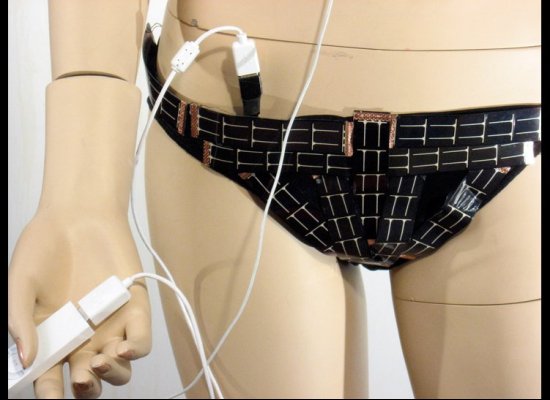
When you're at the beach and you forgot to charge your MP3 or phone, what do you do? Do you wait in the car charging up your device while your friends are having fun in the sun? If so, this may come in handy: a solar-powered bikini!
Invented by a Brooklyn-based designer, Andrew Schneider, this invention is able to power up your electronic devices but is able to be completely safe to wear in the water. Not only that but Schneider is actually accepting custom orders for the bikinis as well.
| Schneider spends about 80 hours on each bikini, hand-stitching super-slim flexible photovoltaic film strips together using conductive thread |
| The swimsuit also comes with a USB connector that you can plug into your phone or mp3 to power up your device using the sun's rays |
Labels:
beach,
brooklyn,
custom orders,
devices,
eco bikini,
electronic,
fashion,
iphone,
mp3 player,
Solar Power,
summer,
tanning,
USB
Thursday, April 4, 2013
Saving Energy also means Save Money on Taxes
In early January, it has been claimed that Congress had extended a policy of federal tax credits for energy efficiency users. In other words, it means that homeowners can earn as much as $500 per year for investments in energy-saving windows, water heaters, air conditioners, and a variety of other home improvements. "Rest assured, if you're doing something that's uniquely beneficial for the environment, there's likely a tax credit there," says Mark Steber, chief tax officer at Jackson Hewitt Tax Service, a tax-return preparation firm headquartered in Parsippany, New Jersey.
According to Steber, insulation, windows, and furnaces are known as being the most commonly used home improvement that qualifies for tax credits. Air-conditioning, water heaters and roofing also are accountable for the tax credits. These home improvements must have been made by 2012 but Steber notes that it's possible to amend tax filings as early as 2009 for earlier purchases.
For simpler items, homeowners are able to receive a tax credit for 10% of the cost up to $500 or a specific amount from $50 to $300. Solar power systems, geothermal pumps, and other more advanced items are eligible for a tax credit of 30% of the cost with no upper limit until December 31, 2016.
To be applicable for tax credits, homeowners are required to submit a 5695 Form with their 2012 taxes to receive such tax credits. No receipts? "No problem," says Steber. "Credit card statements, bills, and other evidence of the purchase can serve as adequate documentation."
According to Steber, insulation, windows, and furnaces are known as being the most commonly used home improvement that qualifies for tax credits. Air-conditioning, water heaters and roofing also are accountable for the tax credits. These home improvements must have been made by 2012 but Steber notes that it's possible to amend tax filings as early as 2009 for earlier purchases.
For simpler items, homeowners are able to receive a tax credit for 10% of the cost up to $500 or a specific amount from $50 to $300. Solar power systems, geothermal pumps, and other more advanced items are eligible for a tax credit of 30% of the cost with no upper limit until December 31, 2016.
To be applicable for tax credits, homeowners are required to submit a 5695 Form with their 2012 taxes to receive such tax credits. No receipts? "No problem," says Steber. "Credit card statements, bills, and other evidence of the purchase can serve as adequate documentation."
Wednesday, April 3, 2013
Philanthropy helps NRG Solar Profits?
CEO of NRG Energy, David Crane, has opened his eyes to the helpless in Haiti after encountering a life-changing experience with a naked young boy of about 10, emerging from underneath his car. He and his daughter had traveled to Port au Prince to volunteer with the Clinton Global Initiative and had left the reception to return to their hotel when they noticed a body from underneath the car. "This kid looked at me," Crane remembers. "There was no life in his eyes. No hope. Complete nothingness. I was so shocked. There were many things I could have done for that kid. I just stood there and did nothing, except act like a dumb American."
Since then, NRG energy had committed an amount of $1 million through the Clinton Global Initiative and has a partnership with Solar Electric Light Fund (SELF) to bring solar power to rural areas in Haiti. Crane hopes that this charitable action will spur the power of solar energy to develop economically in financially poor countries. This also helps create business opportunities in the Caribbean for the company. "The basic idea is demonstrate the flexibility of solar, particularly in distributed applications, and the difference it could make in a country that does not have a functioning electricity system," he said.
In these last couple of years, NRG and its partners have developed many projects in Haiti to help in terms of their lacking of stable power. They have worked together to install a number of small-scale solar systems such as completing projects in 20 schools already and at a fish hatchery known as Lashto Fish Farm. The company also participated in installing solar panels at an orphanage run by the nonprofit organization, Partners in Health.
Since then, NRG energy had committed an amount of $1 million through the Clinton Global Initiative and has a partnership with Solar Electric Light Fund (SELF) to bring solar power to rural areas in Haiti. Crane hopes that this charitable action will spur the power of solar energy to develop economically in financially poor countries. This also helps create business opportunities in the Caribbean for the company. "The basic idea is demonstrate the flexibility of solar, particularly in distributed applications, and the difference it could make in a country that does not have a functioning electricity system," he said.
In these last couple of years, NRG and its partners have developed many projects in Haiti to help in terms of their lacking of stable power. They have worked together to install a number of small-scale solar systems such as completing projects in 20 schools already and at a fish hatchery known as Lashto Fish Farm. The company also participated in installing solar panels at an orphanage run by the nonprofit organization, Partners in Health.
Labels:
bill clinton,
caribbean,
CEO,
charity,
clinton,
economic,
fish,
Global,
haiti,
lashto,
nrg,
philanthropy,
profits,
rural,
Solar,
solar electric light fund
Tuesday, April 2, 2013
Solar Market Needs Investors
According to Solar Energy Industries Association (SEIA), the cost to install solar panels is declining as the solar panel prices have dropped 41% last year compared to 2011. This, in turn, has helped United States solar installations grow 75% in 2012, from the amount of 1,855 megawatts in 2011 to 3,300 megawatts. Because of this steady growth in the solar market, researchers believe that by 2016, solar installations will continue to progress to an estimating amount of 9,000 megawatts.
However, because there is a lack of investments in the solar market field, these solar projects will never be built or obtained. Bloomberg New Energy Finance forecasts that the industry will need $3.1 billion of equity investment in 2013, compared to $1.8 billion in 2012. Also, Environmental Defense Fund (EDF) is committed to helping expand the number of investors in solar projects as the opportunity of investing in such projects would yield much profit and it will enhance sustainability in society today.
Large investors are able to choose between two strategies in terms of investing in these solar projects. The commonly used method would include making investments in large, utility scale projects. For example, recently, there have been residential solar developers creating funds for investors to take stakes in a large number of residential and small commercial solar projects. The other strategy is to have homeowners, whom don't have the upfront capital to purchase solar systems (which estimates the cost up to $15,000 or more), given the option to pay nothing down for solar equipment.
EDF continues to plan an effort to reach out to potential solar investors to make the environmental case for investing in solar and other renewable projects. After all, investing in solar energy helps spur economic development, create American jobs, allow for energy independence and lessen our carbon footprint.
However, because there is a lack of investments in the solar market field, these solar projects will never be built or obtained. Bloomberg New Energy Finance forecasts that the industry will need $3.1 billion of equity investment in 2013, compared to $1.8 billion in 2012. Also, Environmental Defense Fund (EDF) is committed to helping expand the number of investors in solar projects as the opportunity of investing in such projects would yield much profit and it will enhance sustainability in society today.
Large investors are able to choose between two strategies in terms of investing in these solar projects. The commonly used method would include making investments in large, utility scale projects. For example, recently, there have been residential solar developers creating funds for investors to take stakes in a large number of residential and small commercial solar projects. The other strategy is to have homeowners, whom don't have the upfront capital to purchase solar systems (which estimates the cost up to $15,000 or more), given the option to pay nothing down for solar equipment.
EDF continues to plan an effort to reach out to potential solar investors to make the environmental case for investing in solar and other renewable projects. After all, investing in solar energy helps spur economic development, create American jobs, allow for energy independence and lessen our carbon footprint.
Labels:
bloomberg,
commercial,
EDF,
Energy,
equity,
finance,
investment,
investors,
market,
news,
prices,
SEIA,
Solar,
solar panel,
US
Monday, April 1, 2013
Solar "Power" Couple Wins Award
The pair, who are the first Chinese-Australians ever to receive this award, also won a special Australia in the Asian Century Award for their contribution in the Asia region. Australia's Prime Minister, Julia Gillard, also made a video speech to them to endorsing the award. "Jianhua and Aihua were excellent students and staff members here at the University of New South Wales (UNSW), and prolific researchers," says Scientia Professor Martin Green, Director of the AFC Photovoltaics Center of Excellence, and who nominated Dr. Zhao and Dr. Wang for the award. "They took us to the position where we can now make the most efficient cells in the world and nobody yet has been able to catch up. They are both well-respected internationally and have played an influential role in establishing China as a major producer of solar power and PV technology."
In 1999, the pair developed the high efficiency crystallized Silicon PERL cell and set a new record, demonstrating 25% energy conversion efficiency, which remains the highest level achieved in the world so far.
In 2004, Zhao co-founded the Chinese solar cell and manufacturing company China Sunergy, where he is now Chief Technology Officer and Director. Wang, who also completed her Ph.D. degree and worked at UNSW for more than a decade, is the company's Vice-President of research and development.
The duo are now leading China Sunergy's participation in an 863 program, a National High Technology Research and Development Program in China that supports and encourages the development and commercialization of solar cells with a high efficiency rate (over 20%) and a low production cost.
Source : UNSW
Subscribe to:
Posts (Atom)