Showing posts with label electric. Show all posts

Wednesday, September 25, 2013

Silicon Energy and Outback Power Promote Solar Energy

Tim Nelson, of Fire Mountain Solar, discusses Silicon Energy's solar panels with area homeowner Ron Nichols at Silicon Energy's Marysville facility on September 21

     Two local companies, Silicon Energy in Marysville and Outback Power Technologies in Arlington, served as hub sites for this year's Snohomish County Solar Tour, whose informational walk-throughs on Saturday, September 21, were designed to answer the questions of area residents and prospective industry professionals.
      "We're trying to show local homeowners and contractors what's possible with solar power," said Phil Undercuffer, director of product management at Outback's recently opened facility just east of the Arlington Municipal Airport. "We want them to see the advantages of changing over to solar, and even the visitors we've had, who were already knowledgable about this field, weren't aware of a lot of the new technologies."
      Vice President of Arlington Electric, Russell Tilton, also claims that "only 1% of the state is on solar. Just because it's cloudy, people think that you can't rely on solar here, but we get more than enough sun. We get more sun than Germany, and they rely on solar more than anybody."

Thursday, July 18, 2013

How the Tesla Motors S is Made

      Tesla Motors, the company responsible for mass producing the electric car Model S, has claimed to be confident that the production would double to 800 per week until late 2014. In other words, they believe themselves to making equivalent to 40,000 Model S vehicles per year. The latest news provided with an interview with Co-Founder Elon Musk notes that he has said that right now they are "above 400 a week at the current manpower, and not trivially above it." Thus, this helps form the conclusion that they hold of the number they would be mass producing and selling.


       But, how is Tesla Motors S able to produce such a large number of vehicles in a short length of time? How are they different from other automakers when it comes to building the cars? What helps them be more efficient?


      The video below, produced by WIRED magazine, allows us to take a look inside the 5 million-square-foot New United Motor Manufacturing Inc. (NUMMI), which is currently known as the Tesla Factory, in Fremont, California.


Tuesday, June 11, 2013

Solar powered three wheeler called the "Elf"

Rob cotter founder and CEO of Organic Transit in Durham, North Carolina, developed something extraordinary that couldn't be characterized as a bike but is indeed operated as one. It's called the "Elf", this three wheeler is equipped with a solar powered motor that can be switched on anytime when the operator is exhausted from pedalling. Elf is categorized as a bicycle and doesn't require an insurance and registration to ride in the United States. The solar panel is found across the roof from the front to the end of the bike and only needs 7 hours of charging in the sun or could also be plugged into an outlet for less time consumption. The Elf can be well acknowledge to commuter who has to go to work in the morning using the powered motor and pedal back home from work for a good workout. The Elf should weigh about 100 pounds including the solar panel, motor, and battery; it also has a top speed of 20 mph considering the weight of the production model. The Organic Transit had raised enough funds to produce 100 models up for purchase from the Kickstarter Campaign.


Saturday, April 27, 2013

Oil-Rich Russia Works to Increase Renewable Energy

     The Energy Ministry of Russia has recently submitted a draft law to Dmitry Medvedev, prime minister of Russia, which is intended to support the deployment of renewable energy sources, such as solar power, wind power, and hydroelectric power. Russia, however, has failed to meet its renewable energy set goal for 2010, in which it was to obtain 1.5% of the country's electric demand from renewable power plants. In 2011, Russia even failed to reach yet 1%.
      Currently there has been no details concerning tariffs for specific technologies, but notably the new law promises a 14% return on investment. In addition, the electricity is said to be bought through power purchase agreements. If approved, this project would cost an amount of 85 billion rubles (approximately $2,716,396,000). This, in turn, is shown to the public as an incentive scheme that will prioritize projects that are in line with a local content requirement.
      Russia, Saudi Arabia, and United Arab Emirates (UAE) are the few of the largest petroleum exporters throughout the globe. They are each ones of the top 8 petroleum producers yet they acknowledge the environmental consequences of using petroleum, especially UAE whereas the nation aggressively pursues solar and wind energy. The possible reasons for why these petroleum-dependent nations are pursuing renewable energy is as follows: the consequences of climate change, air and water pollution are severe; and the less oil nations consume may lead to more demand in exports causing there to be an increase in foreign exchange revenue and massive petroleum-derived profits.
      This new plan's target goal is for Russia to obtain 2-2.5% of its electricity from renewable energy sources, or 6 gigawatts of installed capacity by 2020. It has also been claimed that the draft law has supposedly been approved by Prime Minister Dimitry Medvedev on April 25, 2013, but there has been no information regarding this announcement in the English media as of yet.

Sunday, April 7, 2013

150 MW California Solar Power Plant is Bought!

      The 150-megawatt Solar Generation 2 photovoltaic power plant, located in Imperial County (California), was recently bought by First Solar, Inc. The construction of this solar power plant is planned to start this year and is set to be completed next year. Once completed, the new photovoltaic solar power plant is to produce enough electricity to power more than 60,0000 homes while displacing more than 115,000 metric tons of carbon dioxide per year. This solar power plant will estimably save around 93,000 metric tons of water per year.
      The San Diego Gas and Electric Company (SDG&E) has agreed to purchase the electrical output under a 25-year power purchase agreement. Once this agreement is started, the photovoltaic solar plant is expected to provide over 800 construction jobs within Imperial County, which has been overcome with high unemployment.
       "We are very pleased to help SDG&E meet its clean energy goals and provide clean, reliable, renewable power to their customers," said Dana Diller, First Solar Vice President of U.S. Business Development. "We are also proud to once again bring the economic benefits of utility-scale solar development to Imperial County, where both county officials and the Imperial Irrigation District, with which this plant will interconnect, have been extremely supportive."
        The financial details of the new purchase is still unknown but it does include 40 megawatts of solar modules that the project had previously purchased from another supplier. First Solar, Inc., is actually planning to integrate those modules into construction and make up the difference with their own modules in order to complete the construction of the power plant. In addition, First Solar will be providing project development, engineering, procurement and construction (EPC), and grid integration services.


Sunday, February 17, 2013

5 Green Tech Trends in 2013

1. Solar Power Technology
The solar industry is facing a decline in price by 2016 when federal investment tax credit for solar installations from 30% to 10%. Though 4 years may seem a lengthy time, it is the same amount of time for a large solar power plant to be permitted, financed and constructed. Thus, as this new year kicks off, be sure to be on a lookout for there will be new discoveries to finance solar power installations, whether it will be residential installed solar panels or solar power plants in remote areas. An example of this could possibly be solar securitization, whereas the leases for residential solar power installations are bundled and sold to investors. Another example is known as crowdsourcing, where investors help finance projects and they would be shareholders of the company by buying a piece of the pie.

2. Watch Out For Solar Energy in California
BrightSource Energy's 370-megawatt Ivanpah "power tower" plant is going online in 2013 and it's the first big solar thermal facility in the U.S. that has been planned to be built more than 20 years. Solar thermal power plant uses mirrors to focus on the sun while it is on top of a liquid-filled boiler to generate more electricity. Though this may be exciting to experiment with, many developers tend to stick with the traditional, inexpensive way of producing solar panels; however, if this power plant is to produce interesting results, it may change these perspectives of solar panels.


BrightSource Energy's 370-megawatt Ivanpah "power tower" plant and its mirrors

3. Tesla Motors is getting ahead in the competition
With the production of the Model S, which is a high-performance electric sports sedan, Tesla Motors is getting ahead of the game in terms of the electric car market because of Silicon Valley company's network of Superchargers. For anyone who have no prior knowledge of this Supercharger network, it is a network of solar-powered chargers that will refill your Tesla Motors Model S free of charge. Not only that but the Model S charges 4-5x the rate of a high-capacity home charger, meaning you can get as far as 150 miles in half an hour. Great car, Tesla; props to you.


Tesla Motors Model S


This is Silicon Valley company's Supercharger; CEO Elon Musk has revealed to the audience the Supercharger, which has already been set up in six locations in California.


4. Biofuels are Advancing
Not only is solar technology advancing but there is a struggling revival of biofuels in place. The Sapphire Energy's algae biofuel demonstration plant in New Mexico desert is producing green crude, which is renewable crude oil made from sunlight, carbon dioxide, and algae to make green oils that can be converted into fuel. SG Biofuels of San Diego are also breeding new branches of jatropha, which is an inedible plant in South America and Africa, to help boost oil yields. 


Sapphire Energy is producing a 100-acre algae field in Southern New Mexico. 

5. China is, of course, winning in this battle of Solar Energy
While many U.S. startups on solar energy are declining, Chinese solar powered manufacturers are supported intensely by their government in that they receive enormous subsidies. In a recent news article, it is discovered that the Chinese is expanding more faster than expected - a Chinese firm had bought an American solar startup. MiaSolé has been expected to stand firm in this competition but in Beijing, it has been announced that Hanergy Holding Group of China, specialized in building hydroelectric dams, completed the purchase of the company and its technology for a fraction of what the investors had put in. 


John Carrington, chief of MiaSolé, is seen with Zhou Jiesan, an executive of Hanergy Holding Group, at the conference in Beijing

(Credit : Forbes Magazine)

Wednesday, February 13, 2013

Google headquarters are more eco-friendly than ever

As we all know "Google" had been most recognized for their most trustworthy search engine that has now been branched out towards many technological innovations such as tablets, smartphones, netbooks, browsers, and smart televisions. It had also been discovered that Google had been charging their vehicles with solar energy by driving around campus with commuter vehicles powered by electricity.
George Clooney's tango T600
Google had worked on a project for fairly quite some time, regarding to charging their electric vehicles cost effectively  Therefore, Google had built carports all around their parking lot involving closely to 9000 solar panels made from Sharp Electronics, a unit of Japan's Sharp Corp, and using their parking lot as a charging station for their vehicles. Google is still looking for ways to make its campus more environmental friendly. “This is definitely just the tip of the iceberg,” Radcliffe said.


Tuesday, February 12, 2013

Helping Slums in Africa have Better Lifestyles!

     In America, where freedom and an opportunity to live a better life is guaranteed, many American lives may take for granted what we are accustomed to having: electricity. In Sub-Saharan African urban areas, 589 million people are living without access to a public electric facility as well as dwelling in slums. That's where the iShack comes in!


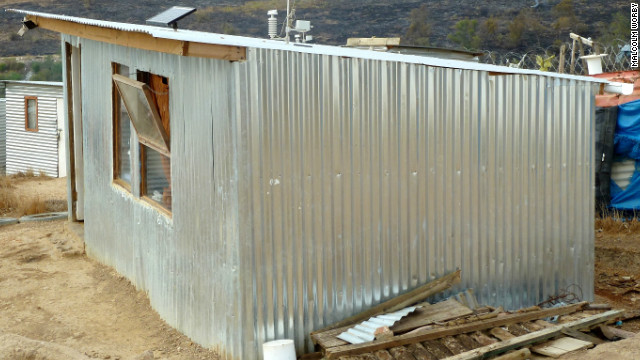
This is the iShack, which was developed by the University of Stellenbosch, where they were able to fund this experimental project using a grant from the Bill and Melinda Gates Foundation. It was developed to shelter families from the extreme temperatures in Africa as well as provide them with reliable power to sustain their lifestyles.

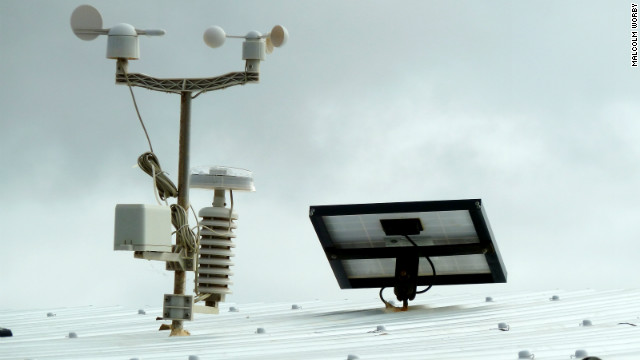
       This particular iShack is currently occupied by Plaatje, a domestic worker employed only once a week, and her three children. It is completely equipped with a photovoltaic panel, providing them with enough electricity to power three lights, a mobile phone charger and an outdoor motion spotlight. 


The structure of the iShack was carefully designed in that windows were placed strategically to provide them with better air circulation and sunlight heating as the roof was sloped to harvest rainwater during winter months. 

Upon living in the iShack, Plaatje and her three children claims that her lifestyle has improved drastically from where she used to dwell in, which was a cold, damp shack with a leaky roof and no electricity. Not bad of a transition for a family struggling as well as many others in Africa.