The newly released "Elysium" has been a spectacular movie for me. It had opened my eyes and made me realize even more why I have decided to embark upon this journey to inform the public of the benefits of solar energy and arose awareness of it.
This movie has inspired me even more because it shows of the catastrophic future we may have in store for us if we continue to use excessive amounts of fossil fuels and consistently contaminate our clean air with pollution.
Therefore, as I am spreading the awareness (and many others) of solar energy and other renewable energy sources, I hope that communities may grow in knowledge to the technology that is available to us, which is steadily growing with many scientists and researchers heavily researching about new technologies.

Showing posts with label public. Show all posts
Showing posts with label public. Show all posts
Wednesday, September 4, 2013


Sunday, June 30, 2013
President Obama Commits to Solar Power Investments
 |
| President Obama discusses about solar power to the audience during a stop in Nevada. Solar power will be part of a new initiative to bring electricity to millions of people in sub-Saharan Africa. |
Along with more than $9 billion in private investments, the United States will be committing more than $7 billion in the next five years towards bringing electricity to millions of people in sub-Saharan Africa, President Obama had said on Sunday in South Africa. "Access to electricity is fundamental to opportunity in this age," Obama said in announcing the solar initiative, known as Power Africa. "It's the light that children study by, the energy that allows an idea to be transformed into a real business. It's the lifeline for families to meet their most basic needs. And it's the connection that's needed to plug Africa into the grid of the global economy."
Sub-Saharan Africa compromises 48 nations. Among the countries to be targeted initially are Ethiopia, Ghana, Kenya, Liberia, Nigeria, and Tanzania. "These countries have set ambitious goals in electric power generation and are making the utility and energy sector reforms to pave the way for investment and growth," the White House said. The more than $7 billion in United States investment will include up to $5 billion in support from the United States Export-Import Bank.
"More than two-thirds of the residents of sub-Saharan Africa lack access to power," the president said. "In rural areas of the region, more than 85% of people don't have electricity. Power Africa will deliver electricity to cities, villages, and farms throughout sub-Saharan Africa." According to the International Energy Agency, sub-Saharan Africa will need more than $300 billion in investment to provide power for everyone by 2030. "Power Africa will supply electricity to at least 20 million households and businesses," the White House said.
Wednesday, June 5, 2013
New Jersey Approves $446 Million Solar Investment
New Jersey state regulators had approved a proposal brought up by the utility company, Public Service Electric & Gas (PSE&G), which the plan triggered permission granted to go ahead on two projects increasing the involvement and usage of solar power. The two projects will both be financed by an incremental increase in customers' utility bills.
According to Associated Press reports, the first project consists of offering nearly $200 million in loans to commercial and residential areas to install solar power systems in their buildings. The second project will help finance an extension of the utility's Solar4All program through 2016 that helps to develop solar installations primarily on unused landfills and former industrial sites, known as brownfields.
However, the state-appointed advocate for utility customers has criticized the landfill decision as creating an unfair market advantage for PSE&G since the company is expected to recover its costs through rate increases. In return, New Jersey had, instead, approved the proposal under the conditions that adjustments be made in PSE&G's utility rates such as reducing greenhouse gas emissions, raising electric bills for residential customers by $11.45 a year and costs to the same gas customers by $2.18 annually.


According to Associated Press reports, the first project consists of offering nearly $200 million in loans to commercial and residential areas to install solar power systems in their buildings. The second project will help finance an extension of the utility's Solar4All program through 2016 that helps to develop solar installations primarily on unused landfills and former industrial sites, known as brownfields.
However, the state-appointed advocate for utility customers has criticized the landfill decision as creating an unfair market advantage for PSE&G since the company is expected to recover its costs through rate increases. In return, New Jersey had, instead, approved the proposal under the conditions that adjustments be made in PSE&G's utility rates such as reducing greenhouse gas emissions, raising electric bills for residential customers by $11.45 a year and costs to the same gas customers by $2.18 annually.

Monday, April 29, 2013
Solar Power Traffic Lights Coming Soon
With the help of a Delhi-based firm under a public-private partnership (PPP) model, officials of Allahabad Municipal Corporation (AMC) have decided upon installing a solar-powered traffic system within 22 crossroads of Allahabad, India. As part of its pilot project in 2012, solar panels, signal lights and other equipment were installed at four major crossroads such as Subhash crossing and Rana Pratap crossing; however, because of Maha Kumbh's preparations, the project has not been processed yet.
The AMC had focused on starting the project at the earliest convenience. "Once the panel and other equipment are available, the solar-powered signals are to be installed at other major crossings too," Municipal Commissioner R. Vikram Singh had told Times of India (TOI).
 Last year, the solar-power traffic lights system had started phase-wise after AMC had given a no-objection certificate to a Delhi-based firm. In perspective to the fact that the solar-powered traffic signals has been successful in Agra and Bareilly, traffic police authorities have been coordinating with AMC authorities to bring them also to the city. Traffic inspector Indra Pal Singh had remarked to TOI that solar panel rooms are already in place at major crossings and that hopefully, the lights would begin to work within three months.
Solar traffic lights are usually equipped with photovoltaic cells as well as having a solar panel attached to the top of the pole, which helps convert sunlight into electrical power. A solar charger regulates the voltage coming out of the solar panel. As this occurs, the regulated power obtained is used to charge a battery. Lighting is produced through extra-bright LED lights, which help produce an array of light that can last up to 4 years and are extremely energy efficient.
Under this project, the previous traffic lights have already been removed and a fresh system of solar traffic lights are to be installed. The officials have also sought public cooperation in the same regard. Legal advisor of AMC, S.L. Yadev, said, "The project would help conserve energy and ensure smooth vehicular movement as solar energy would be operating the traffic lights. While one electric traffic light costs between 4 to 5 lakh, the solar signal costs around 8 lakh. Solar power is an efficient alternative provided enough energy is stored."
The AMC had focused on starting the project at the earliest convenience. "Once the panel and other equipment are available, the solar-powered signals are to be installed at other major crossings too," Municipal Commissioner R. Vikram Singh had told Times of India (TOI).
Last year, the solar-power traffic lights system had started phase-wise after AMC had given a no-objection certificate to a Delhi-based firm. In perspective to the fact that the solar-powered traffic signals has been successful in Agra and Bareilly, traffic police authorities have been coordinating with AMC authorities to bring them also to the city. Traffic inspector Indra Pal Singh had remarked to TOI that solar panel rooms are already in place at major crossings and that hopefully, the lights would begin to work within three months.Solar traffic lights are usually equipped with photovoltaic cells as well as having a solar panel attached to the top of the pole, which helps convert sunlight into electrical power. A solar charger regulates the voltage coming out of the solar panel. As this occurs, the regulated power obtained is used to charge a battery. Lighting is produced through extra-bright LED lights, which help produce an array of light that can last up to 4 years and are extremely energy efficient.
Under this project, the previous traffic lights have already been removed and a fresh system of solar traffic lights are to be installed. The officials have also sought public cooperation in the same regard. Legal advisor of AMC, S.L. Yadev, said, "The project would help conserve energy and ensure smooth vehicular movement as solar energy would be operating the traffic lights. While one electric traffic light costs between 4 to 5 lakh, the solar signal costs around 8 lakh. Solar power is an efficient alternative provided enough energy is stored."
Tuesday, April 9, 2013
Nanotechnology used to make Solar Energy 25% more efficient
Sol Voltaics has announced recently that by using nanotechnology, it is helping build solar cell modules to be 25% more efficient than the solar cells marketed in society today. If the company is able to deliver SolInk as how it is perceived in advertisements, then this could mean it would help make it excessively cheaper to introduce solar cells to a more broader set of customers.
This nanotechnology is said to have the capacity to make solar power in residential areas and business environments more affordable, which can be necessary to increase adoption of solar energy and to help compete at the same cost of electricity produced from fossil fuel plants. This argument alone has helped Sol Voltaics raise $11 million in funding from public and private Scandinavian investors.
CEO of Sol Voltaics, Dave Epstein, has claims that with nanotechnology, "we can increase the efficiency of energy capture, conversion and storage. There's no smoke and mirrors here." With two advances, it is made possible. The team, led by founder Lars Samuelson (a Lund University professor), created a technology known as Aerotaxy, which makes it cheaper to create nanomaterials. With this, they are able to create gallium arsenide nanowires that can serve as solar collectors and that they can integrate directly into solar wafers, known commonly as solar cells.
As a material, gallium arsenide has been used in solar for years because of its high reliability and high efficiency at converting light into electricity. However, gallium arsenide is expensive to manufacture. SolInk dramatically reduces the cost by minimizing the amount of materials being used. In addition to SolInk's benefits, rivals such as Innovalight (bought by DuPont) can boost a solar panel's efficiency from 15% to almost 16.1% while SolInk is claimed to build the efficiency from 15% to almost 19% or from 20% to 25%. The theoretical limit in converting sunlight to electricity is approximately 27% to 29%.
With Aerotaxy, it helps build nanomaterials by mixing vapors in the air in just a second. The active materials, then, bond to form larger, uniform structures while in motion. Nanowires are literally able to grow in the air. Also, with Aerotaxy, it helps generate tens of billions of nanowires per second on a continuous basis. "It's like cranking out nanowires with a popcorn popper instead of a craftsman. That's the makings of an affordable and scalable technology for mass production," said Epstein.
According to Greentech Media, demand for solar is growing globally as we know it, with the total number of gigawatts expected at 29.8 in 2012 to 50.8 gigawatts in 2016. Epstein figures that solar is here to stay, since the sun is the only resource that will surely outlast fossil fuels, wind, and other clean energy sources in the run. "In spite of what you might hear, solar is a healthy market," said Epstein.
This nanotechnology is said to have the capacity to make solar power in residential areas and business environments more affordable, which can be necessary to increase adoption of solar energy and to help compete at the same cost of electricity produced from fossil fuel plants. This argument alone has helped Sol Voltaics raise $11 million in funding from public and private Scandinavian investors.
CEO of Sol Voltaics, Dave Epstein, has claims that with nanotechnology, "we can increase the efficiency of energy capture, conversion and storage. There's no smoke and mirrors here." With two advances, it is made possible. The team, led by founder Lars Samuelson (a Lund University professor), created a technology known as Aerotaxy, which makes it cheaper to create nanomaterials. With this, they are able to create gallium arsenide nanowires that can serve as solar collectors and that they can integrate directly into solar wafers, known commonly as solar cells.
As a material, gallium arsenide has been used in solar for years because of its high reliability and high efficiency at converting light into electricity. However, gallium arsenide is expensive to manufacture. SolInk dramatically reduces the cost by minimizing the amount of materials being used. In addition to SolInk's benefits, rivals such as Innovalight (bought by DuPont) can boost a solar panel's efficiency from 15% to almost 16.1% while SolInk is claimed to build the efficiency from 15% to almost 19% or from 20% to 25%. The theoretical limit in converting sunlight to electricity is approximately 27% to 29%.
With Aerotaxy, it helps build nanomaterials by mixing vapors in the air in just a second. The active materials, then, bond to form larger, uniform structures while in motion. Nanowires are literally able to grow in the air. Also, with Aerotaxy, it helps generate tens of billions of nanowires per second on a continuous basis. "It's like cranking out nanowires with a popcorn popper instead of a craftsman. That's the makings of an affordable and scalable technology for mass production," said Epstein.
According to Greentech Media, demand for solar is growing globally as we know it, with the total number of gigawatts expected at 29.8 in 2012 to 50.8 gigawatts in 2016. Epstein figures that solar is here to stay, since the sun is the only resource that will surely outlast fossil fuels, wind, and other clean energy sources in the run. "In spite of what you might hear, solar is a healthy market," said Epstein.
 |
| CEO of Sol Voltaics, Dave Epstein |
Saturday, April 6, 2013
New Bill Could Help Georgia Grow as a Solar Market
Local Public Service Commissioner Lauren "Bubba" McDonald, Jr., had noted that "Georgia is the third best state for solar energy in the United States but ranks 35th in actual solar installations, even the cost of panels have decreased 33%." In fact, the state has the same solar potential as central Africa or India, with most areas of the state generating between 4.92 and 5.21 kilowatt hours per square meter per day.
With all this to be considered, Georgia represents an unmarked opportunity to grow. Therefore, it's no surprise that Georgia Solar Utilities company is backing the "Rural Georgia Economic Recovery and Solar Resource Act of 2013." This bill is enabled to create a unique financing model for solar energy, wherein third parties (like Georgia Solar Utilities) can submit proposals to the Public Service Commission for financing and aggregating solar energy.
Some of the details enlisted in the bill have the capacity to help Georgia grow in terms of the solar market. The statute clears roadblocks like interconnection and grid access for generating assets and this entire program is on an opt-in basis. Competitive bidding on construction and installation will be creating market incentives to help lower the soft costs of solar panel installations. Since photovoltaic and solar farms are covered under the statute, neighborhood homes in Atlanta could have solar power on their roofs while unused fields in the country can yield 30-megawatt solar farms. If the sun decides to shine in either place, ratepayers in both areas reap the benefits as well as this geographical distribution also brings about less variability.
"The world has changed for the economics of solar in Georgia, but we're stuck with 40-year-old laws that block us from taking advantage of it," said Robert Green, CEO of Georgia Solar Utilities. "So we're offering a conservative, no-brainer proposition: let a private company bear all the downside risk for investing in solar with no upward pressure on utility rates, and let ratepayers reap the upside of future cost savings as solar prices fall."
With all this to be considered, Georgia represents an unmarked opportunity to grow. Therefore, it's no surprise that Georgia Solar Utilities company is backing the "Rural Georgia Economic Recovery and Solar Resource Act of 2013." This bill is enabled to create a unique financing model for solar energy, wherein third parties (like Georgia Solar Utilities) can submit proposals to the Public Service Commission for financing and aggregating solar energy.
Some of the details enlisted in the bill have the capacity to help Georgia grow in terms of the solar market. The statute clears roadblocks like interconnection and grid access for generating assets and this entire program is on an opt-in basis. Competitive bidding on construction and installation will be creating market incentives to help lower the soft costs of solar panel installations. Since photovoltaic and solar farms are covered under the statute, neighborhood homes in Atlanta could have solar power on their roofs while unused fields in the country can yield 30-megawatt solar farms. If the sun decides to shine in either place, ratepayers in both areas reap the benefits as well as this geographical distribution also brings about less variability.
"The world has changed for the economics of solar in Georgia, but we're stuck with 40-year-old laws that block us from taking advantage of it," said Robert Green, CEO of Georgia Solar Utilities. "So we're offering a conservative, no-brainer proposition: let a private company bear all the downside risk for investing in solar with no upward pressure on utility rates, and let ratepayers reap the upside of future cost savings as solar prices fall."
 |
| Columbus, GA solar installers |
Tuesday, February 12, 2013
Helping Slums in Africa have Better Lifestyles!
In America, where freedom and an opportunity to live a better life is guaranteed, many American lives may take for granted what we are accustomed to having: electricity. In Sub-Saharan African urban areas, 589 million people are living without access to a public electric facility as well as dwelling in slums. That's where the iShack comes in!


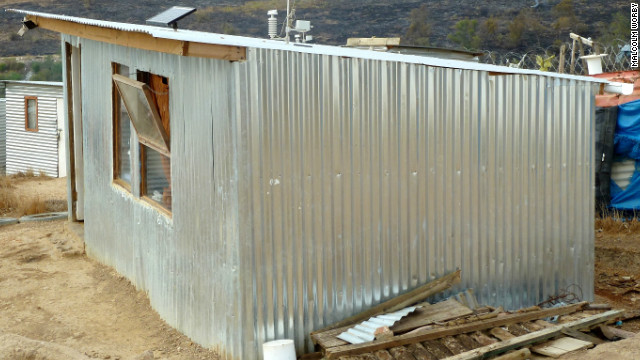
This is the iShack, which was developed by the University of Stellenbosch, where they were able to fund this experimental project using a grant from the Bill and Melinda Gates Foundation. It was developed to shelter families from the extreme temperatures in Africa as well as provide them with reliable power to sustain their lifestyles.
This particular iShack is currently occupied by Plaatje, a domestic worker employed only once a week, and her three children. It is completely equipped with a photovoltaic panel, providing them with enough electricity to power three lights, a mobile phone charger and an outdoor motion spotlight.
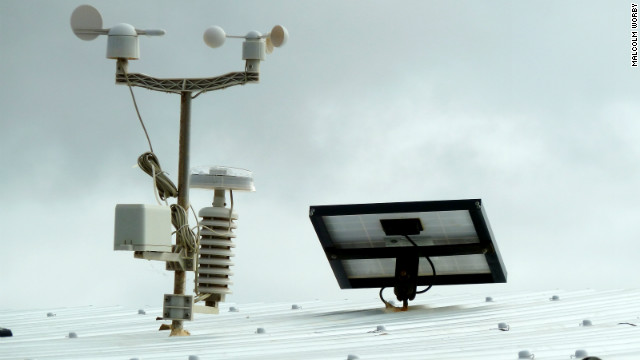
The structure of the iShack was carefully designed in that windows were placed strategically to provide them with better air circulation and sunlight heating as the roof was sloped to harvest rainwater during winter months.
Upon living in the iShack, Plaatje and her three children claims that her lifestyle has improved drastically from where she used to dwell in, which was a cold, damp shack with a leaky roof and no electricity. Not bad of a transition for a family struggling as well as many others in Africa.
Subscribe to:
Posts (Atom)