Showing posts with label Japan. Show all posts

Thursday, September 26, 2013

Japan Growing in Renewable Energy Sources

A man watches waves break into anti-tsunami barriers after a storm in Iwaki, Fukushima Prefecture on September 16, 2013. Tokyo Electric Power Co. (TEPCO), operator of the tsunami-crippled Fukushima Daiichi nuclear power plant, said on Monday it released what was believed to be untainted rainwater around the storage tank areas into the ocean in order to avoid flooding near the tanks due to heavy rains by Typhoon Man-yi

        According to new research released by NPD Solarbuzz, Japan has become one of only five countries to have achieved 10 gigawatts of cumulative solar capacity. While aiming to diversify its energy mix, Japan is developing its renewable energy sector, especially as it steers away from nuclear power following the disaster at the Fukushima nuclear power plant in 2011. The development of solar power in Japan slowed in the mid-2000s, partly due to a 10-year energy plan that favored nuclear power.
       With a shifting of focus toward renewable energy, and after a new law approving feed-in tariffs for renewable energy was passed last year, the Japanese government is giving incentives for the use of solar energy. The policy requires utility companies in Japan to buy electricity from renewable sources like solar and wind at a premium price for the next 20 years.

Monday, August 12, 2013

Honda Sells Renewable Energy in Japan, 2015


          The new Honda facility, located in Sakura, Japan, is where the automaker is planning to install a "mega solar system" that can produce 10 megawatt a year on a new test course. After installing a total of 70,000 solar panels on 82 acres, the track will cover approximately 62 acres, which will be used for testing "advanced safety technologies." Honda currently does not have any plans for much electricity use in Sakura but hopes to also join the green community by building a biotype on the property so that members of the local community may come and enjoy it.
           Honda's 82-acre solar farm is planned to be larger than Hyundai's 50-acre solar field in Korea and Volkswagen's 33-acre solar farm in Chattanooga, Tennessee,  which are both shown below.

Hyundai's 50-acre solar field in Korea
Volkswagen's 33-acre solar field in Chattanooga, Tennessee

Wednesday, July 31, 2013

Sharp Develops See-Through Solar Panels


         Sharp Electronics, a United States subsidiary of an Osaka-based Sharp Corporation and a company known for manufacturing a wide range of consumer and business products, has announced the development of see-through solar panels that offers many benefits over the standard solar panel. The semi-transparent solar panel is designed to be used in balcony railings or as windows in tall buildings, where it can generate energy while also letting light in. The glass, while see-through up close, creates a privacy screen from farther away, acts as a heat shield and is aesthetically pleasing to the eye as well.
        According to CNET, the solar panel "delivers a solar power conversion efficiency of about 6.8-percent with a maximum output of 95 watts." This is quite a bit lower than standard solar panels that typically may have conversion efficiencies of 15 to 20 percent, but then again, standard solar panels can't act as windows.
       Even with a lower efficiency level, the see-through solar panels are generating energy in parts of a building that would typically consist of ordinary glass or metal, so they're still increasing the potential renewable energy generation of a building by a significant amount.
      The panels are also constructed with laminated glass that has been infused with photovoltaic solar cells and are 4.5-feet wide by 3.2-feet tall and only 0.3 inches thick. They will go on sale in Japan on October 1, but so far, no pricing or plans for a release in the United States has been revealed as of yet.

Thursday, May 2, 2013

A Solar Power Plant at an Airport

      A unit of a Japanese refiner, Showa Shell Sekiyu K.K. (5002), and Development Bank of Japan will be constructing a solar power station with New Kansai International Airport Co. The station at Kansai International Airport near Osaka in western Japan is claimed to have 11.6 megawatts in capacity and is expected to start running early next year, the companies stated in an announcement on April 23, 2013.
       This is the first project of a venture between Showa Shell's Solar Frontier K.K. and DBJ, set up in January to invest in solar projects in Japan, according to the statement. "Solar Frontier will be supplying solar panels and operation and maintenance services while DBJ will be supporting financial structuring for the project," the companies had said. Airport land and buildings for the project will be provided by New Kansai.

Visual mock-up of KIX MegaSolar

For more details, visit here.

Sunday, April 21, 2013

Japan Endorses Solar Energy to Ghana

      In the midst of Ghana's energy crisis, Japanese ambassador to Ghana, Naoto Nikai, has urged Ghanaian authorities to invest in solar energy. At an event to inaugurate the first stage of the 315 kilowatt Solar Electricity Generation System at the Noguchi Memorial Institute for Medical Research (NMIMR) in Accra, Nikai had stated: "The utilization of renewable energy, such as solar power, is the future and the utilization of it will enable us to better sustain our planet and our lives."
     In addition, Ghana is to be seen as a country plentiful of sunlight shining upon them throughout the year, which brings solar power to be an appropriate option for them. Nikai has claimed that in 2010, the government had extended a grant of 610 million yen (approximately $7.6 million) for the project aimed at introducing clean energy through solar electricity generation system for the Noguchi Institute.
     "I hope that the government of Ghana will fully utilize the system and ensure the provision of necessary resources to maintain it in good shape for years to come," said Nikai. Professor Kwadwo Ansah Koram, Director of NMIMR, also said the design and procurement processes were currently underway for the second stage of the project, which will increase the generation capacity by another 400 kilowatt hours, accumulating to a total of 715 kilowatt hours. He notes that this will add on to the electricity power generation in the country as well as adding the excess power to the power grid to supply the rest of the university. "Besides the immediate cost of savings," he said, "additional benefits will accrue in terms of reduction in carbon emissions and less delirious impact on the environment."
      Emmanuel Armah-Kofi Buah, Minister of Energy and Petroleum, said "the first phase of the 315 kilowatt solar park is unique because it is the first large-scale project to be commissioned since the passage of the Renewable Energy Bill into Act (Act 823), which seeks to create the enabling environment for the development of renewable energy sources in Ghana." He also said the project was a clear demonstration that solar energy could contribute to cost-effective energy conservation and management, as well as government institutions.


Monday, April 8, 2013

Japan and Taiwan: Growing with Clean Energy

        Japan has continuously thrived towards solar energy and other renewable energy sources (as well as being a nation of energy storage), after an earthquake occurred in destroying Fukushima, a nuclear power plant, in March 2011. The government had put in place generous amounts of subsidies for alternative energy development. Both IHS and Bloomberg New Energy Finance predicts that Japan will be growing extensively towards solar energy than any other country, with the exception of China, in 2013.
        The natural disaster affecting the destruction of Fukushima has also triggered Taiwan to re-evaluate its nuclear power policy and has stirred protests against the construction of a fourth nuclear power plant, which is nearing its completion.
        Taiwan is also subsidizing clean energy and is planning to increase solar and wind energy development. Late last year, the government had raised the 2013 target for new solar energy by 30% to 130 megawatts. Not only this but Taiwan is actually home to major solar cell makers. By promoting more production of solar energy, this would help Taiwan's domestic solar manufacturers, who have been lately devastated by an oversupply of solar cells in the global market over the past two years. This, in turn, has caused prices to crash and forced many solar manufacturers to go out of business.
        However, one of the largest Taiwanese solar cell makers, Neo Solar Power, recently had announced a survival plan to merge with another Taiwanese solar cell maker, DelSolar. Neo Solar had claimed that the combined company will have "close to 2 gigawatts" of production capacity, which would be comparable to First Solar Inc.'s capacity of 1.9 gigawatts.

Miaoli, Taiwan

Saturday, March 23, 2013

Japan to build nation's largest solar park

Softbank Corp., Japan's third largest mobile phone company, and Mitsui & Co. joined together to build what may be the nation's largest solar power plant. From previous nuclear disasters in a quarter of a century, Chairman of Softbank, Masayoshi Son’s ambition grew towards installing more renewable energy and had signed a pact with Mitsui & Co to build a 39.5 megawatts in capacity of solar energy. Since the Fukushima nuclear disaster in March 2011, Japan's government had swayed away towards the reliance of atomic energy and moved onward favors of natural gas and renewable energy. Softbanks plans on investing about 230 megawatts of renewable energy, mostly towards solar. Mitsui will be getting 90% of the profit from trading in metals, oil, and gas and had took the role of Chief Executive Officer in project management.


Wednesday, March 20, 2013

India is installing Solar Power

            Mercom Capital Group, a clean energy consulting company, has announced that India is most likely installing 1300-1400 megawatts of solar power this year. They also claimed that India has installed 980 megawatts last year than the expecting number of 1,090 megawatts. Mercom Capital Group's CEO and Co-Founder Raj Prabhu has said "the difference was largely due to delays in Gujurat  to commission 144.5 megawatts of photovoltaic projects."
           The installations accumulating in India currently is said to be over 1,200 megawatts and if Mercom's predictions are correct: India is likely to add to the number 1,300 to 1,400 more megawatts of solar power. The Indian solar power installations, however, has been arranged and overseen by Jawaharlal Nehru National Solar Mission (JNNSU), which also holds a goal to install 20,000 megawatts of solar power by 2022, and various state policies and state RPOs (renewable portfolio obligations). Renewable portfolio obligations are regulations that requires increased production of energy from renewable energy resources such as wind, solar, biomass and giothermal.
         Meanwhile, global solar installation numbers for 2012 are likely to be in the 30-32 gigawatt range and in 2013, solar installations may possibly hit 34.5 gigawatts of solar power. Prabhu also notes that "based on current forecasts, it looks like the significant share of installations in 2013 will come from emerging markets like China, Japan, and India."

Villagers inspect solar panels at the Gujurat Solar Park in Charanka village, in Gujurat state. Research suggests that the state, along with Rajasthan and Karnataka, is flooded with enough sunlight to accommodate large solar power plants.

Tuesday, March 12, 2013

Japan Proposes to cut Solar Power Price

         Recently, it has been discovered that Japan has submitted a proposal to cut solar power prices by 10%, leaving, in its midst, a place for incentives to trigger increasing amounts of solar power installations. Researchers have observed that the prices for solar power would be assumed to be cut in the beginning of April this year while payment for the wind energy sector prices remain unchanged. However, of course, the Japanese government has to consent to the proposal before solar power prices can be enforced and utilized.
         In the previous year, Japan has invested on non-residential solar projects totaling the estimate value to be 222 billion yen, or in other words, $2.3 billion, adding 580 megawatts of solar power capacity. This year, however, the country is claimed to have spent 438 billion yen for 1,460 megawatts.
          Hisao Kayaoka, secretary general of the Japan Photovoltaic Energy Association, has claimed that the proposal may not change circumstances for the solar market is expanding but, the proposal will provide continual growth in the market. The association member companies consists of the following companies: SunTech Power Holdings (STP) Company, Kyocera Corporation, Solar Frontier K.K. and Sharp Corporation. These companies help make solar panels while another member of the association, Kansai Electric Power Company, is responsible for power utility. The proposed incentives actually aid companies, such as Kyocera Corporation, in giving them opportunity to construct solar stations while also encouraging Softbank Corporation, a mobile-phone provider, to develop solar power plants.

Shirashi Daiichi Elementary School received a grant of up to 30 million Japanese yen ($369,000) to purchase and install solar power equipment. In this photo featured above, it is shown that the pupils are touching the solar power generator installed.

Thursday, March 7, 2013

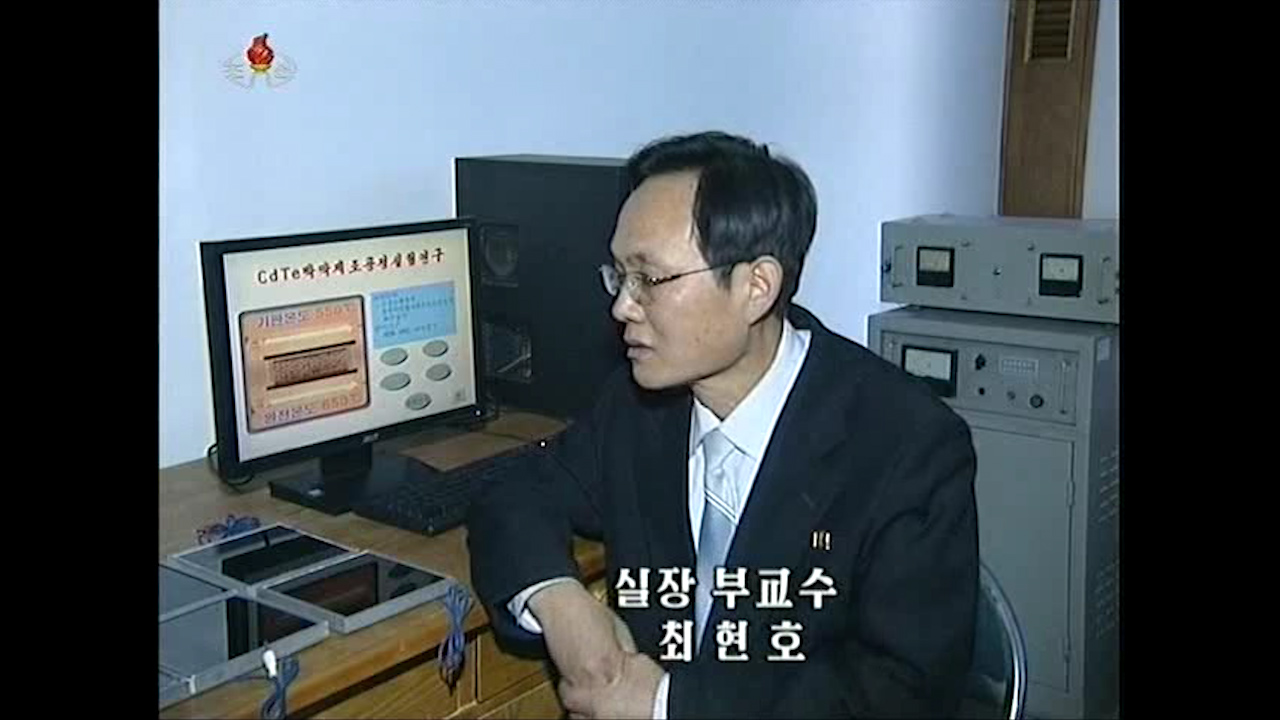
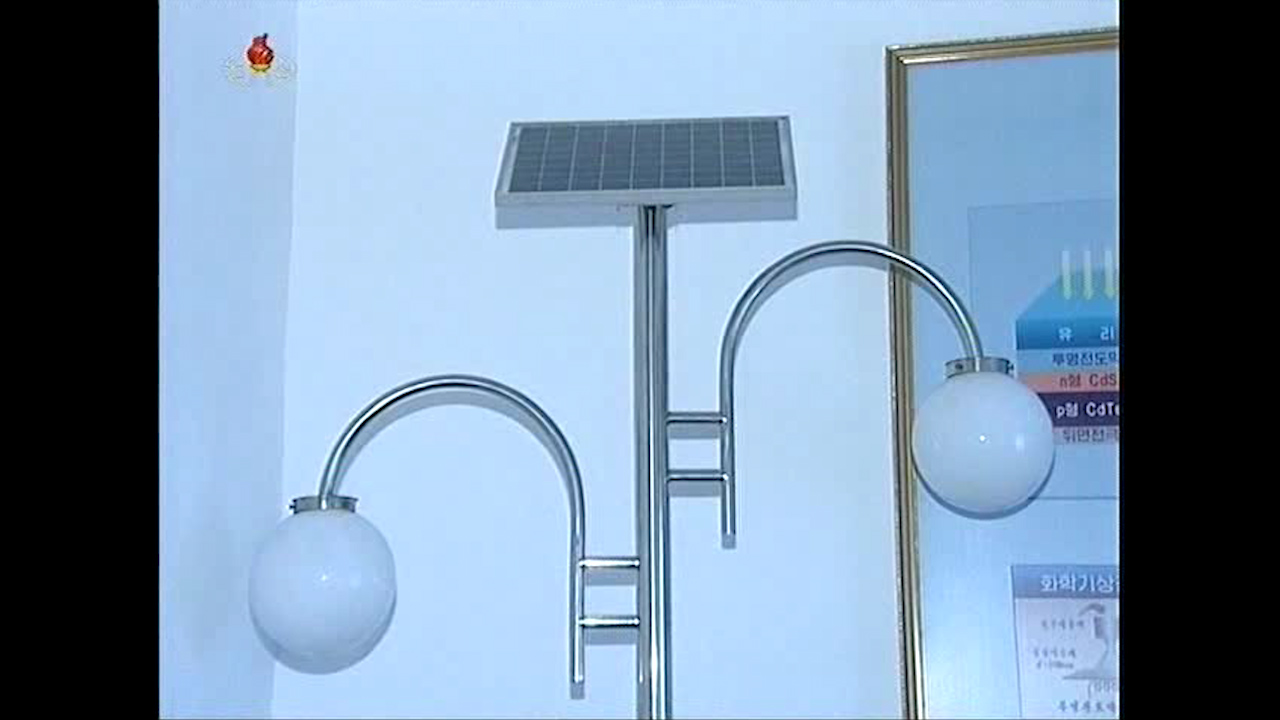
Pyongyang's solar powered street lamps

It has been reported in North Korea state TV that the capital city of North Korea, Pyongyang, started developing street lamps powered by solar energy. Since North Korea is a very isolated country in international trading, an associate professor from Kim Chaek University named Cho Hyon Ho, developed a solar panel and battery combination onto street lights. Although the technology used for the development isn't advanced compared to the production of solar panels from Japan and China, this can be summarized as a new approach for North Korea and their future endeavors.