Showing posts with label China. Show all posts

Wednesday, October 16, 2013

Robots Built to Clean and Install Solar Panels

Rover, a robot, placing a solar panel in a track at Alion Energy, which is looking to shave labor costs

       In Richmond, California, there are low-tech robots installing and maintaining large-scale solar farms, at least a start-up company, known as Alion Energy, believes so. Working in near secrecy until recently, the company is ready to use its machines in three projects in the next few months in California, Saudi Arabia, and China. If all goes well, executives expect that they can help bring the price of solar electricity into line with that of natural gas by cutting the cost of building and maintaining large solar installations.
       In recent years, the solar industry has wrung enormous costs from developing farms, largely through reducing the price of solar panels more than 70% since 2008. But with prices about as low as manufacturers say they can go, the industry is turning its attention to finding savings in other areas.
       "We've been in this mode for the past decade in the industry of really just focusing on module costs because they used to be such a big portion of system costs," said Arno Harris, chief executive of Recurrent Energy, a solar farm developer, and chairman of the board of the Solar Energy Industries Association. Now, Mr. Harris said, "Eliminating the physical plant costs is a major area of focus through eliminating materials and eliminating labor."

Sunday, September 29, 2013

IKEA Selling Solar Panels!


         The Sweden-based company known as Ikea, best known for cheap basics such as its Billy bookcases and Ektorp sofas, plans to offer solar panel packages at all of its 17 British stores within the next 10 months. It said the move follows a successful pilot project at its Lakeside store to the east of London, which sells one photovoltaic system almost every day.
        Britain offers subsidies to encourage the takeup of photovoltaic panels in a bid to boost production and help it meet legally-binding targets to cut carbon emissions. A solar panel owner receives subsidies for generating solar-sourced electricity exporting excess power into the grid. An average semi-detached house would earn as much as $1,200 a year through subsidies and savings on energy bills, an IKEA case study showed.
      IKEA's offer of panels made by China's Hanergy Holding Group Ltd., a power producer and manufacturer of thin-film photovoltaic panels, involves a minimum spend of 5,700 pounds for which customers get 18 panels which should break even within roughly 7 years. "We know that our customers want to live more sustainably and we hope working with Hanergy to make solar panels affordable and easily available helps them do just that," said Joanna Yarrow, IKEA's head of sustainability in the United Kingdom and Ireland.

Tuesday, August 13, 2013

China Wins Deal of One of World's Largest Solar Power Plant in the U.S.


        Trina Solar Unlimited, one of the world's leading PV companies founded in 1997, had announced today that it will supply 1.1 million photovoltaic panels for a 250-megawatt power plant to be built in the Nevada Desert. It will not only be one of the world's largest photovoltaic power stations but it will also be the largest in the U.S. to use Chinese-made solar panels.
        While Chinese companies have attained control of most of the U.S. residential market, utilities and developers of solar power plants have actually favored U.S. companies such as First Solar and SunPower. However, this favoritism is drastically changing. In November, another Chinese solar manufacturer Yingli, won a contract to provide panels for a 200-megawatt power plant under construction in the California desert outside of San Diego.
         As the Chinese market is advancing, Trina Solar and Yingli are emerging as China's top competitors in the power plant industry. Thus, Trina and Yingli have taken measures to ensure distance from other Chinese manufacturers, whom are faced extreme pressure to cut costs as they struggle with billions of dollars in debt, and emphasize the quality of their products.

Friday, July 19, 2013

China Increases Taxes on Solar Panels

Monitoring a solar panel in the production line at a factory in Zhejiang province in China

         China's Minister of Commerce had announced on Thursday that China plans to impose tax tariffs that could exceed 50% on materials imported from the United States and South Korea to make solar panels due to the tension lingering with the West over a trade dispute. This decision, which is to go in effect next week, would be a catastrophe to the American industry for China is supposedly their largest customer for solar-grade poly-silicon, the main ingredient needed for making solar panels. 
         China dominates the world market in terms of solar panel production, exporting approximately $30 billion a year in panel shipments to the West while it imports a large number of poly-silicon from the United States, Europe and Korea. Its decision to heavily tax the United States but levy lower rates on some Korean producers and leave Europe out is widely seen as a retaliation act for the previous trade incidents occurring between the United States and China. 
         Last Fall, the United States had put tax tariffs (of about 24-36%) on Chinese imports after finding out that Chinese companies were benefitting from unfair government subsidies and selling their products below the cost of production. A spokeswoman for Michael Froman, the United States trade representative, had responded that they were in discussions with China related to global issues in solar technology and that this step did not move the ball forward, but "we will continue to engage." 
         Senator Ron Wyden, Democrat of Oregon, and Chairman of the Committee on Energy and Natural Resources notes that "China is slapping tariffs on poly-silicon because it is unhappy that the United States exercised its legal rights and stood up for our remaining solar manufacturers. I am confident that these retaliatory tariffs will be shown to be without merit."

Wednesday, March 20, 2013

India is installing Solar Power

            Mercom Capital Group, a clean energy consulting company, has announced that India is most likely installing 1300-1400 megawatts of solar power this year. They also claimed that India has installed 980 megawatts last year than the expecting number of 1,090 megawatts. Mercom Capital Group's CEO and Co-Founder Raj Prabhu has said "the difference was largely due to delays in Gujurat  to commission 144.5 megawatts of photovoltaic projects."
           The installations accumulating in India currently is said to be over 1,200 megawatts and if Mercom's predictions are correct: India is likely to add to the number 1,300 to 1,400 more megawatts of solar power. The Indian solar power installations, however, has been arranged and overseen by Jawaharlal Nehru National Solar Mission (JNNSU), which also holds a goal to install 20,000 megawatts of solar power by 2022, and various state policies and state RPOs (renewable portfolio obligations). Renewable portfolio obligations are regulations that requires increased production of energy from renewable energy resources such as wind, solar, biomass and giothermal.
         Meanwhile, global solar installation numbers for 2012 are likely to be in the 30-32 gigawatt range and in 2013, solar installations may possibly hit 34.5 gigawatts of solar power. Prabhu also notes that "based on current forecasts, it looks like the significant share of installations in 2013 will come from emerging markets like China, Japan, and India."

Villagers inspect solar panels at the Gujurat Solar Park in Charanka village, in Gujurat state. Research suggests that the state, along with Rajasthan and Karnataka, is flooded with enough sunlight to accommodate large solar power plants.

Sunday, March 10, 2013

China is leading; no surprise there

       China begins to expand the most towards the $77 billion solar energy industry and is being featured as providing global solar installations to a heaping record. Recent researchers have claimed that this new generation capacity has reached estimating 14% this year to 34.1 gigawatts, whereas in the previous year, it was 4.4% growth due to the government subsidies being cut in Italy and France.
       After constructing many factories, China has been able to cut solar panel prices down 20% in the past year and, in turn, has become the largest consumer of the devices. These price cuts essentially are helping many installers such as SolarCity Corporation, SunPower Corporation while also drastically hurting manufacturers including LDK Solar Company of China and Norway's Renewable Energy Corporation.
        Studies are proven that solar demand is steadily increasing in its growth as European markets slump for SolarCity and SunPower have indeed been gaining 38% and 109% of installations. These low-cut prices may be driving many installations to be done but they are not aiding manufacturers much help in terms of their profit margin cuts. As China had opened many factories and the prices for solar panels dropped, manufacturers' profit margins crashed, stock markets drastically changed and, in result, pushed companies into the option of bankruptcy.
       Even Germany, which has been the country that prospered in being known as the largest solar market in 2013, may be getting unsettled by the thought of China possibly taking over the reputation. However, many sources have claimed that projects have been multiplied in providing financial aid services to its fellow solar companies in a bid to help diversify Germany. Shi Dinghuan, government advisor, has commented that China plans to install 35 gigawatts by the year 2015, compared to a previous goal of 21 gigawatts.

Employees assemble photovoltaic panels (solar panels) at SunTech Power Factory

Thursday, March 7, 2013

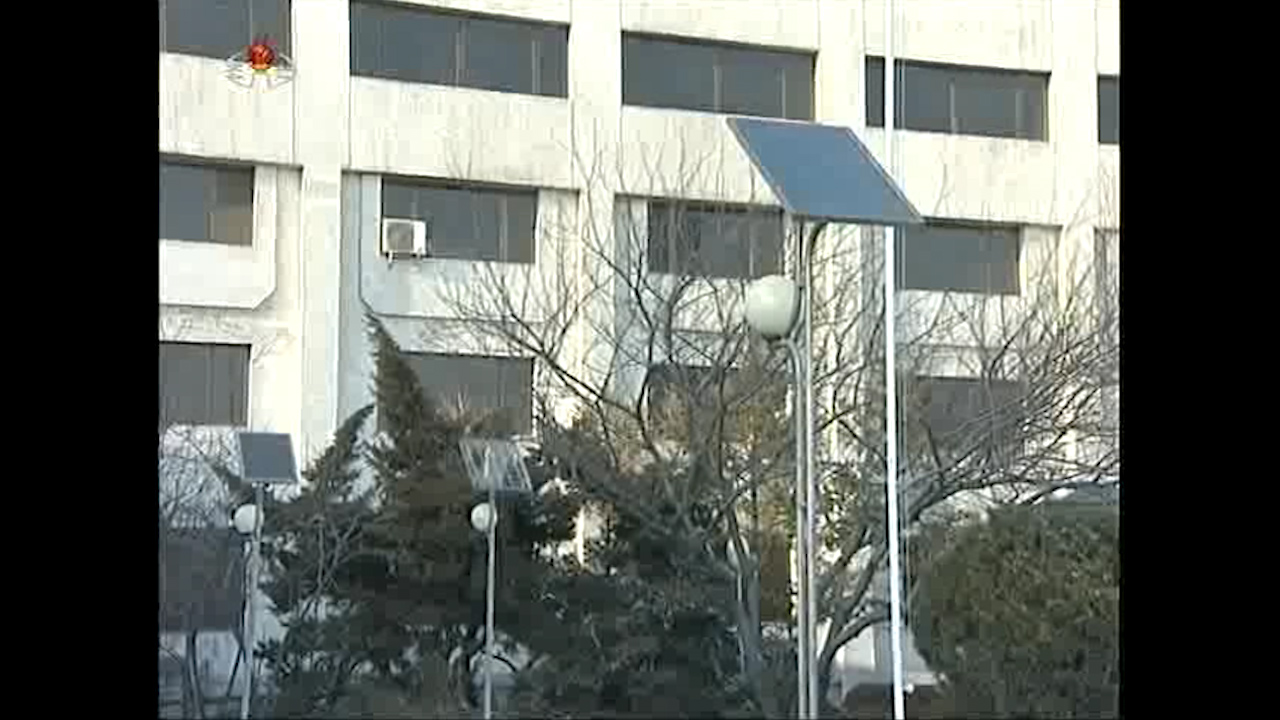
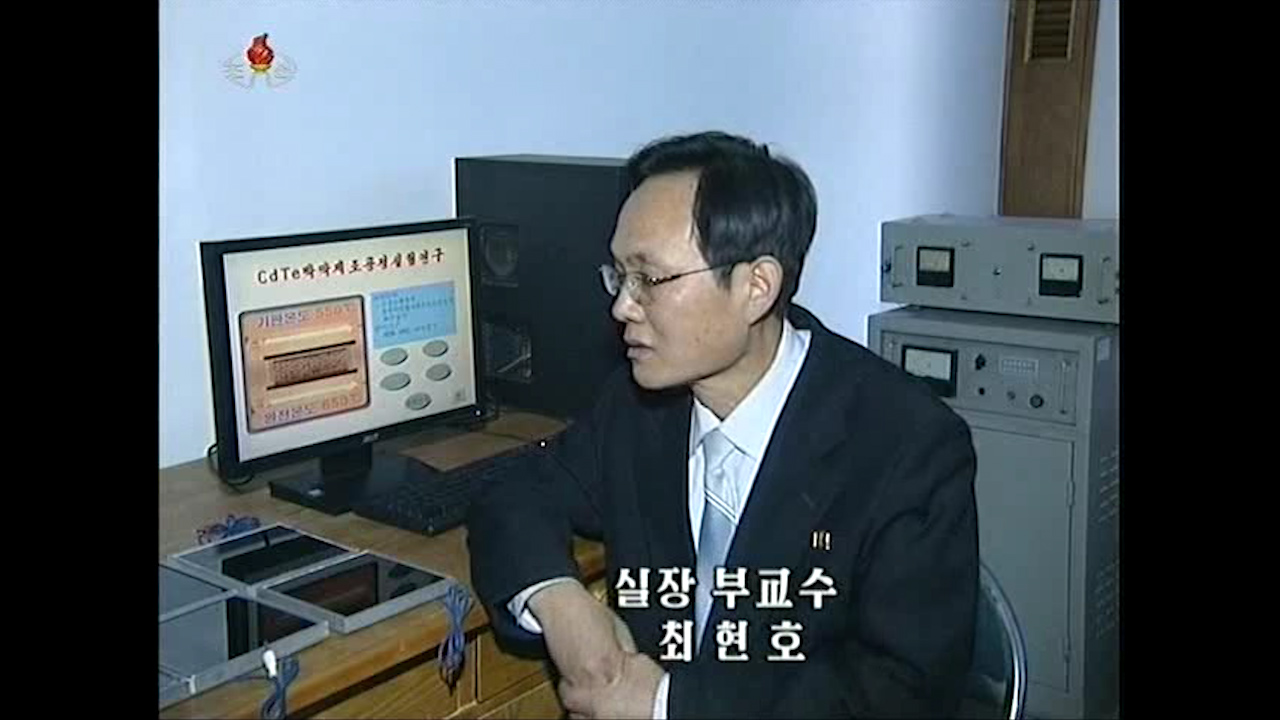
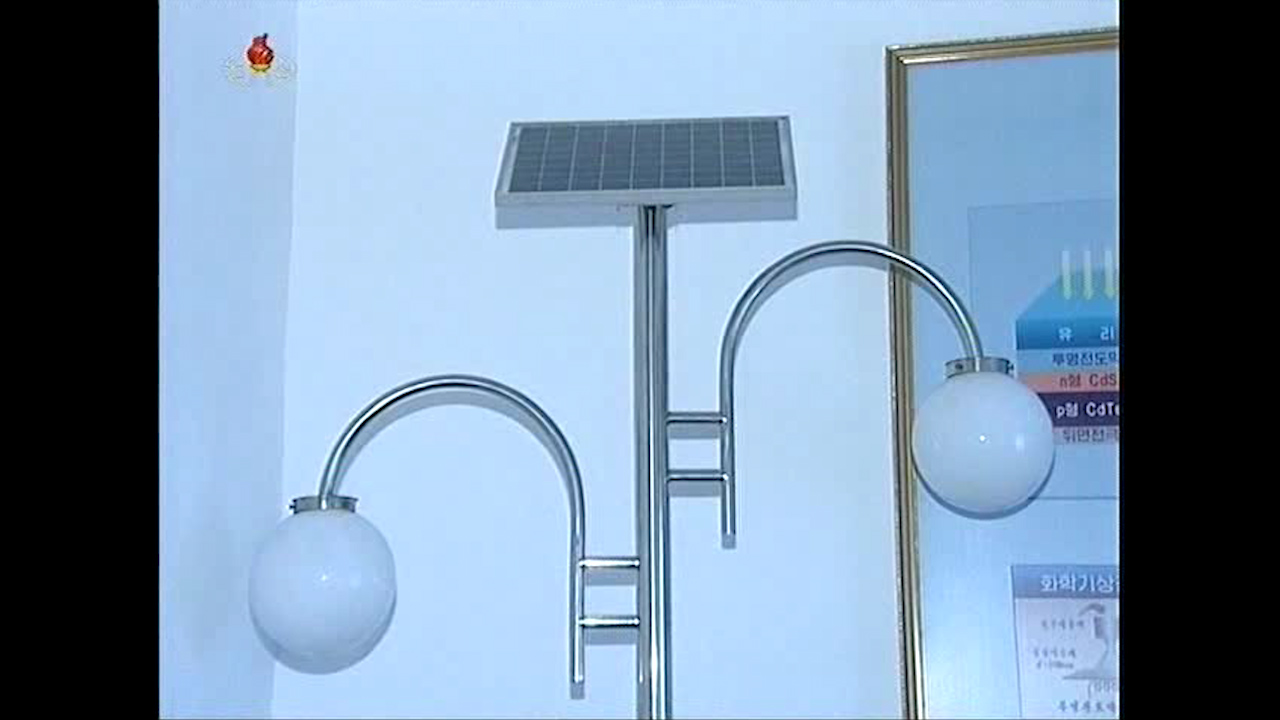
Pyongyang's solar powered street lamps

It has been reported in North Korea state TV that the capital city of North Korea, Pyongyang, started developing street lamps powered by solar energy. Since North Korea is a very isolated country in international trading, an associate professor from Kim Chaek University named Cho Hyon Ho, developed a solar panel and battery combination onto street lights. Although the technology used for the development isn't advanced compared to the production of solar panels from Japan and China, this can be summarized as a new approach for North Korea and their future endeavors.


Sunday, February 17, 2013

5 Green Tech Trends in 2013

1. Solar Power Technology
The solar industry is facing a decline in price by 2016 when federal investment tax credit for solar installations from 30% to 10%. Though 4 years may seem a lengthy time, it is the same amount of time for a large solar power plant to be permitted, financed and constructed. Thus, as this new year kicks off, be sure to be on a lookout for there will be new discoveries to finance solar power installations, whether it will be residential installed solar panels or solar power plants in remote areas. An example of this could possibly be solar securitization, whereas the leases for residential solar power installations are bundled and sold to investors. Another example is known as crowdsourcing, where investors help finance projects and they would be shareholders of the company by buying a piece of the pie.

2. Watch Out For Solar Energy in California
BrightSource Energy's 370-megawatt Ivanpah "power tower" plant is going online in 2013 and it's the first big solar thermal facility in the U.S. that has been planned to be built more than 20 years. Solar thermal power plant uses mirrors to focus on the sun while it is on top of a liquid-filled boiler to generate more electricity. Though this may be exciting to experiment with, many developers tend to stick with the traditional, inexpensive way of producing solar panels; however, if this power plant is to produce interesting results, it may change these perspectives of solar panels.


BrightSource Energy's 370-megawatt Ivanpah "power tower" plant and its mirrors

3. Tesla Motors is getting ahead in the competition
With the production of the Model S, which is a high-performance electric sports sedan, Tesla Motors is getting ahead of the game in terms of the electric car market because of Silicon Valley company's network of Superchargers. For anyone who have no prior knowledge of this Supercharger network, it is a network of solar-powered chargers that will refill your Tesla Motors Model S free of charge. Not only that but the Model S charges 4-5x the rate of a high-capacity home charger, meaning you can get as far as 150 miles in half an hour. Great car, Tesla; props to you.


Tesla Motors Model S


This is Silicon Valley company's Supercharger; CEO Elon Musk has revealed to the audience the Supercharger, which has already been set up in six locations in California.


4. Biofuels are Advancing
Not only is solar technology advancing but there is a struggling revival of biofuels in place. The Sapphire Energy's algae biofuel demonstration plant in New Mexico desert is producing green crude, which is renewable crude oil made from sunlight, carbon dioxide, and algae to make green oils that can be converted into fuel. SG Biofuels of San Diego are also breeding new branches of jatropha, which is an inedible plant in South America and Africa, to help boost oil yields. 


Sapphire Energy is producing a 100-acre algae field in Southern New Mexico. 

5. China is, of course, winning in this battle of Solar Energy
While many U.S. startups on solar energy are declining, Chinese solar powered manufacturers are supported intensely by their government in that they receive enormous subsidies. In a recent news article, it is discovered that the Chinese is expanding more faster than expected - a Chinese firm had bought an American solar startup. MiaSolé has been expected to stand firm in this competition but in Beijing, it has been announced that Hanergy Holding Group of China, specialized in building hydroelectric dams, completed the purchase of the company and its technology for a fraction of what the investors had put in. 


John Carrington, chief of MiaSolé, is seen with Zhou Jiesan, an executive of Hanergy Holding Group, at the conference in Beijing

(Credit : Forbes Magazine)

Saturday, February 9, 2013

African huts glow with solar power

KIPTUSURI, Kenya - Sara Ruto's yearn for electricity began with a purchase of her first cellphone for receiving money transfers, contacting relatives, or even calling nearby markets for the prices of chicken. However, powering her phone was no simple matter, due to the fact that there is no electricity to begin with in farming villages residing in Kenya. Therefore, Ruto walked 2 miles to hitch a 3 hour ride on a motorcycle taxi bound to Mogotia, the nearest town with electricity  to charge her phone for 30 cents. It doesn't end there; with such high demand of locals needing to charge their phones, Ruto has no choice but to leave her phone there for 3 days before returning home. However, Ruto's distressful routine ends in February when the family saves up their money as well as selling their cattle for a solar panel made from China costing them $80 but well worth the investment. The solar panel provides enough electricity to charge their phones and also running 4 overhead lights with switches. Ever since Ruto had hooked up her solar panel, her children of six drastically improved their school grades from having light in their home as well as avoiding burns from kerosene lamps.

Sara Ruto holds a small solar-powered LED light, part of a system that also charges cell phones, at her home in Kiptusuri, Kenya. Ruto, who used to travel miles to charge her mobile phone at the nearest town with electricity, purchased a solar panel for about $80 to charge her phone and power several lights.
Ed Ou / New York Times News Service


Thanks to this solar panel, Sara Ruto no longer takes a three-hour taxi ride to a town with electricity to recharge her cellphone.(Ed Ou/The New York Times)

Thursday, February 7, 2013

China's desperate need of cleaner energy

Children at school were being halted from outdoor activities and physical education for several days from massive amounts of smog shrouded across Beijing in January. Anything beyond this level is labeled as a critical state, endangering many lives of young children and adults. Severe crisis of air pollution could prong towards pollution mitigation in which taking 12,000 lives in just two weeks during the incident of, "London Fog" in 1952. The biggest source of the cause of air pollution in China are the cars that are being run on and off of dirty diesel fuel, which brings us closer to global warming inch by inch. We could make a difference in this world; it just takes determination and compassion towards the world we stand upon. Like what Morgan Freeman says, “In the harshest place on Earth, ... love finds a way.”
(Hospital admissions for respiratory complaints jumped 20%)

Monday, January 14, 2013

Solar Technology around the World

     It has been reported recently that China has been the most highest demand towards renewable energy investors. Costs of solar technology had been falling drastically over the years and is expected to ease China's power shortage by 2015. Solar supplies are expected to be leveled to the same price as electricity fees that is passed on right now. Soon, there will be the era of Solar Panels around every residential and  commercial rooftops in a large scale in a short period of time as well as the supply of coal and oil dropping slowly but surely in our economic crisis with Obama's viewpoint towards the production of oil and gas.


     South Korea had also been following the crowd towards solar energy and the government had been, without a doubt,  the greenest government in the world. Largest industries and companies such as Samsung, LG, and Hyundai are making massive investments towards wind, solar, tidal, and nuclear energy onto vehicles, power supplies and home appliances.

Nepal is also not far behind in introducing solar technology.
Did you know you can conduct energy through human hair?
     In a recent discovery in Nepal, Malin Karki, a Nepalese teen who attends school in Kathmandu, invented  a solar panel that conducts static energy through strands of human hair called melanin. These pigments of hair are connected to each pin designed in a square panel that can produce up to 18 watts of power that costed him as low as $38 as a whole. Inspired by a book written by Stephen Hawking, he may have started an amazing revolutionary idea around the world.
human hair, nepal, nepalese teen, innventor, teen innventor, solar panel, solar power,