Showing posts with label Korea. Show all posts

Monday, August 12, 2013

Honda Sells Renewable Energy in Japan, 2015


          The new Honda facility, located in Sakura, Japan, is where the automaker is planning to install a "mega solar system" that can produce 10 megawatt a year on a new test course. After installing a total of 70,000 solar panels on 82 acres, the track will cover approximately 62 acres, which will be used for testing "advanced safety technologies." Honda currently does not have any plans for much electricity use in Sakura but hopes to also join the green community by building a biotype on the property so that members of the local community may come and enjoy it.
           Honda's 82-acre solar farm is planned to be larger than Hyundai's 50-acre solar field in Korea and Volkswagen's 33-acre solar farm in Chattanooga, Tennessee,  which are both shown below.

Hyundai's 50-acre solar field in Korea
Volkswagen's 33-acre solar field in Chattanooga, Tennessee

Friday, July 19, 2013

China Increases Taxes on Solar Panels

Monitoring a solar panel in the production line at a factory in Zhejiang province in China

         China's Minister of Commerce had announced on Thursday that China plans to impose tax tariffs that could exceed 50% on materials imported from the United States and South Korea to make solar panels due to the tension lingering with the West over a trade dispute. This decision, which is to go in effect next week, would be a catastrophe to the American industry for China is supposedly their largest customer for solar-grade poly-silicon, the main ingredient needed for making solar panels. 
         China dominates the world market in terms of solar panel production, exporting approximately $30 billion a year in panel shipments to the West while it imports a large number of poly-silicon from the United States, Europe and Korea. Its decision to heavily tax the United States but levy lower rates on some Korean producers and leave Europe out is widely seen as a retaliation act for the previous trade incidents occurring between the United States and China. 
         Last Fall, the United States had put tax tariffs (of about 24-36%) on Chinese imports after finding out that Chinese companies were benefitting from unfair government subsidies and selling their products below the cost of production. A spokeswoman for Michael Froman, the United States trade representative, had responded that they were in discussions with China related to global issues in solar technology and that this step did not move the ball forward, but "we will continue to engage." 
         Senator Ron Wyden, Democrat of Oregon, and Chairman of the Committee on Energy and Natural Resources notes that "China is slapping tariffs on poly-silicon because it is unhappy that the United States exercised its legal rights and stood up for our remaining solar manufacturers. I am confident that these retaliatory tariffs will be shown to be without merit."

Wednesday, June 19, 2013

Marine Solar Park built as a landmark in Changwon, Korea

The Marine Solar Park was first constructed by the Ministry of Knowledge and Economy as the world's tallest solar tower, which was built as the nation's landmark in 2006. The solar park is composed of two sections: the exhibition floor and the solar panel tower that is constructed above it. The solar tower stands firm in 136 meters high and the entire floor space is 6,336 square meters across a spacious lot of 14,977 square meters. With a shape of a sailing ship, the solar tower can generate 1,264 kW a day with a capacity of 600 kW/h, equivalent to the total energy consumption of 200 households. The four story exhibition floor will accommodate a 644 square meter conference room that can seat 500 people at a time. In the near future, the Marine Solar Park will not only be a tourist attraction but a learning site to steer many towards a cleaner environment with sustainable renewable energy and a business center for companies.

Marine Solar park constructed on top of Eumjido in Jinhae-gu
Outside view inside the exhibition floor

Wednesday, May 1, 2013

South Korean Firm Installs Solar Power Plant in Pakistan

      Pakistan's largest province, Baluchistan, by area, is rich in mineral resources, but while it is highly strategically located near Iran and the rest of Pakistan, it remains quite underdeveloped. Over the past few years, foreign companies have forged partnerships with the provincial government for extraction of valuable minerals from the area. Presently now a South Korean company plans to develop a solar power plant, which will help bring prosperity and growth to the region.
       CK Solar Korea has signed a Memorandum of Understanding with the Baluchistan government to set up a 300 megawatt solar power project near the province's largest city, Quetta. The project is expected to require a total investment of $900 million and is to be completed by 2016. This project is to aid and bring relief to the province, which like the rest of the country, is suffering from extreme power shortages.
       Provincial Secretary of Energy, Fuad Hashim Rabbani, claims that "this project will help overcome the shortfall of electricity in Baluchistan. The project will provide green energy particularly in areas where there is no conventional electricity option." He also adds, "Currently, the local population of targeted areas are using kerosene lanterns, which is hazardous to the health and non-economical due to the intermittent price hike." He also notes that electricity to medical facilities such as hospitals, Basic Health Units and installation of solar street lights were amongst the major benefits of the project.
       In addition, the project will help the province increase in self-reliance in terms of the energy industry. While the province is the gateway to Pakistan's much needed energy supplies from the neighboring country Iran, it lags behind most parts of the country in economic development. Despite being very rich in natural resources and being the largest province in the country, Baluchistan's contribution to Pakistan's gross domestic product has been less than 5% between years 1973 and 2000.


Thursday, March 7, 2013

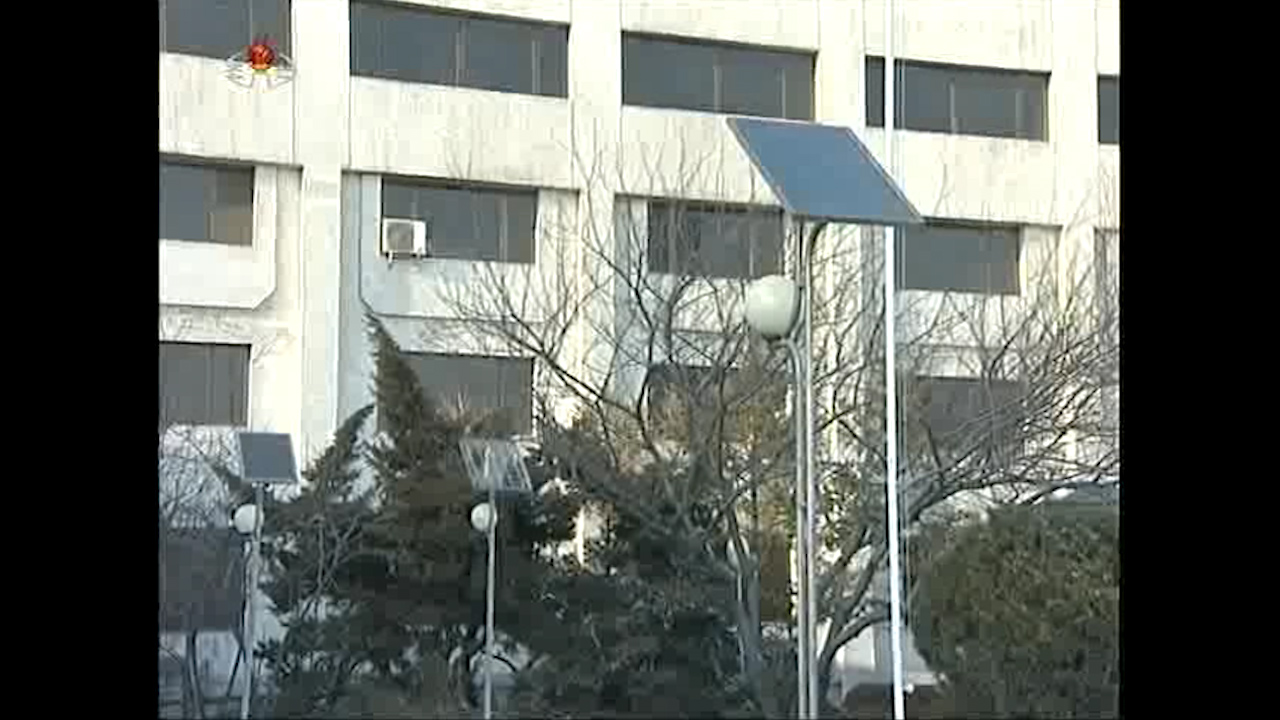
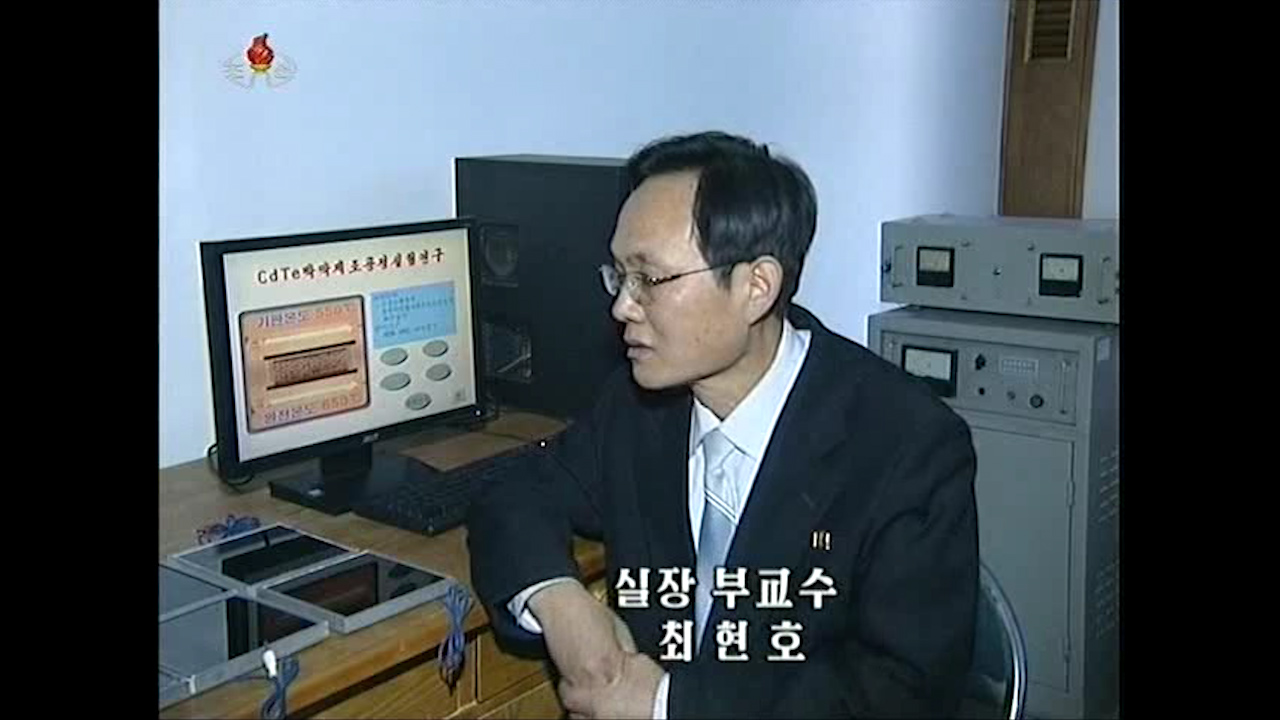
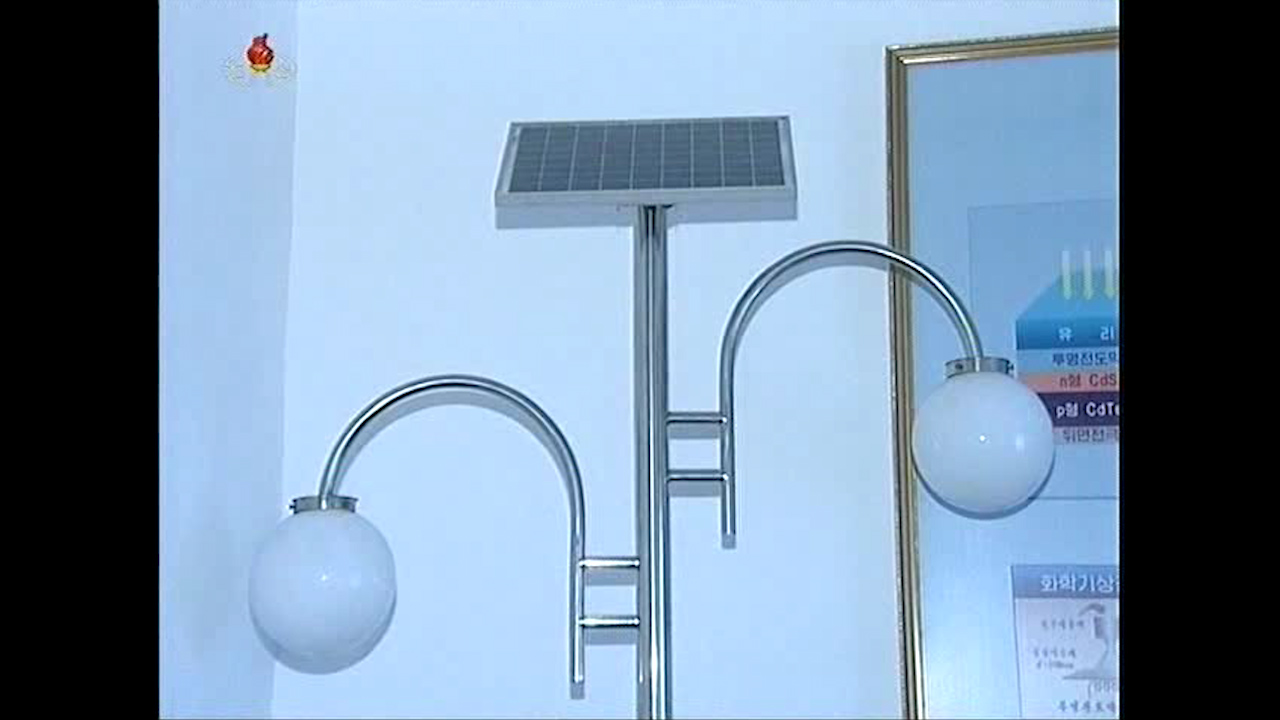
Pyongyang's solar powered street lamps

It has been reported in North Korea state TV that the capital city of North Korea, Pyongyang, started developing street lamps powered by solar energy. Since North Korea is a very isolated country in international trading, an associate professor from Kim Chaek University named Cho Hyon Ho, developed a solar panel and battery combination onto street lights. Although the technology used for the development isn't advanced compared to the production of solar panels from Japan and China, this can be summarized as a new approach for North Korea and their future endeavors.


Monday, January 14, 2013

Solar Technology around the World

     It has been reported recently that China has been the most highest demand towards renewable energy investors. Costs of solar technology had been falling drastically over the years and is expected to ease China's power shortage by 2015. Solar supplies are expected to be leveled to the same price as electricity fees that is passed on right now. Soon, there will be the era of Solar Panels around every residential and  commercial rooftops in a large scale in a short period of time as well as the supply of coal and oil dropping slowly but surely in our economic crisis with Obama's viewpoint towards the production of oil and gas.


     South Korea had also been following the crowd towards solar energy and the government had been, without a doubt,  the greenest government in the world. Largest industries and companies such as Samsung, LG, and Hyundai are making massive investments towards wind, solar, tidal, and nuclear energy onto vehicles, power supplies and home appliances.

Nepal is also not far behind in introducing solar technology.
Did you know you can conduct energy through human hair?
     In a recent discovery in Nepal, Malin Karki, a Nepalese teen who attends school in Kathmandu, invented  a solar panel that conducts static energy through strands of human hair called melanin. These pigments of hair are connected to each pin designed in a square panel that can produce up to 18 watts of power that costed him as low as $38 as a whole. Inspired by a book written by Stephen Hawking, he may have started an amazing revolutionary idea around the world.
human hair, nepal, nepalese teen, innventor, teen innventor, solar panel, solar power,