Showing posts with label africa. Show all posts

Friday, July 5, 2013

Solar Impulse: Last Trip from Washington, D.C., to New York


            The ultimate goal for Solar Impulse was to fly across the globe powered solely upon the sun's rays. So far, it has accomplished many goals in the last three years: in 2010, it flew for 26 hours straight; in 2011, it flew from Belgium to Paris, France and in 2012, a prototype had completed the first intercontinental flight connecting from Europe to Africa. This year, it proposed a challenge to fly across United States from the East coast to the West. 


The itinerary featured: from San Francisco (California) to Phoenix (Arizona) to Dallas (Texas) to St. Louis (Missouri) ending in the last haul to Washington, D.C., and New York

The fourth leg from St. Louis to Washington, D.C., has been completed successfully while the trip from Washington D.C., to New York is steadily approaching. You can view updates and the schedule for the rest of the historic flight here.

There are also many videos of their stops featured here.

Sunday, June 30, 2013

President Obama Commits to Solar Power Investments

President Obama discusses about solar power to the audience during a stop in Nevada. Solar power will be part of a new initiative to bring electricity to millions of people in sub-Saharan Africa.

          Along with more than $9 billion in private investments, the United States will be committing more than $7 billion in the next five years towards bringing electricity to millions of people in sub-Saharan Africa, President Obama had said on Sunday in South Africa. "Access to electricity is fundamental to opportunity in this age," Obama said in announcing the solar initiative, known as Power Africa. "It's the light that children study by, the energy that allows an idea to be transformed into a real business. It's the lifeline for families to meet their most basic needs. And it's the connection that's needed to plug Africa into the grid of the global economy."
        Sub-Saharan Africa compromises 48 nations. Among the countries to be targeted initially are Ethiopia, Ghana, Kenya, Liberia, Nigeria, and Tanzania. "These countries have set ambitious goals in electric power generation and are making the utility and energy sector reforms to pave the way for investment and growth," the White House said. The more than $7 billion in United States investment will include up to $5 billion in support from the United States Export-Import Bank.
       "More than two-thirds of the residents of sub-Saharan Africa lack access to power," the president said. "In rural areas of the region, more than 85% of people don't have electricity. Power Africa will deliver electricity to cities, villages, and farms throughout sub-Saharan Africa." According to the International Energy Agency, sub-Saharan Africa will need more than $300 billion in investment to provide power for everyone by 2030. "Power Africa will supply electricity to at least 20 million households and businesses," the White House said.

Saturday, June 1, 2013

Google itself Helps Solar Energy Project

      Involved in its green energy investments, Google has set its eyes on the Jasper Power Project, a South African solar power plant. This investment alone totals to $12 million and claims to be the first project that Google has invested in, pertaining to the location being Africa. However, the $12 million investment provided by Google is not the total investments spent for South Africa for many investors are involved in this as well.
      The Jasper Power Project will be a photovoltaic plant, which will have the capacity to generate 96 megawatts of clean energy for residents of South Africa. The project will not only help meet the country's renewable energy goals but also provide long-term jobs and economic development opportunities.
     "Back in 2008, South Africa experienced a severe energy shortage, which resulted in blackouts throughout the country and slowed down economic growth," writes Google energy and sustainability director Rick Needman on May 30, 2013. "Since then, the South African government has been actively supporting the growth of new sources of electricity to power the nation ... Given South Africa's position  as an economic powerhouse in Africa, a greener grid in South Africa can set an example for the whole continent."

The Jasper Power Project is located in the Northern Cape Province of South Africa, near Potmasburg

Once constructed, the project will use solar panels such as these

Thursday, April 25, 2013

Solar-Powered Computers for Off-Grid Schools

      In 2009, a 19-year-old graduating senior from Hong Kong's International School, Charles Watson, carrying a rudimentary computer, had took off a year from entering a university to travel to Nepal to work on a project he came up with while still in school: to provide off-the-grid schools with solar-linked computing power. "Once I got to Nepal, I was running a blog, taking photos and so on, saying 'We need computers,'" he says. "I did a fundraising run in Nepal and that raised enough to buy 30 computers at $300 each - $10,000 if you include the solar panels."
      Watson, an American who has be raised in Hong Kong, is currently 23 and still is not attending a university, despite being accepted at the University of Illinois, and doesn't plan on attending any time in the foreseeable future. Instead, he is the founder and chief of SolarLEAP, a nonprofit organization company whose computers are often assembled by his parents at their kitchen table, but they are delivering computing power to schools without reliable electricity, or none at all, in countries as diverse as Nepal, the Philippines, Ethiopia, and, he hopes, across the world.
       "As many as 1.3 billion people, a fifth of the world's population, remain without access to electricity," he says. Ten countries--four in developing Asia and six in sub-Saharan Africa--account for two-thirds of those without electricity. Unless further action is taken, it is projected that close to one billion people will be without electricity still in 2030.
Charles Watson and friends
        Watson has since branched out to Ghana, where he has installed 24 computers, each running on solar power in off-grid schools. After the projects in Nepal and Ghana were completed, demand in rural communities began to grow. Within weeks, organizations in India and Ethiopia were looking for unique low-power consumption computers to run in schools without electricity. Furthermore, Watson was looking for a way to continue the work without his direct, on-the-ground involvement, and thus SolarLEAP was born.
        Today, he has installed 200 of solar-powered computers in five countries with funding from non-governmental organizations and anybody he can solicit money from. "The transformation of schools is dramatic," he says. In 2010, after installation of his computers in Canumay School near Antipolo in the Philippines, the school moved from last place to a first ranking in its school district. He provided the first solar-powered computers to any school in India. "One in four people around the globe don't have access to electricity," he said. "More than 100 million children don't have access to education and a large share of students fortunate enough to be in school don't have access to quality education materials."

Friday, April 19, 2013

Largest Solar Plant in Africa


    Recently, it has been announced that the largest solar plant in Africa has been ceremoniously brought online in Mauritania. The 15-megawatt plant will be expected to meet a full one-tenth of the nation's electricity demand and keep lights on in some 10,000 homes. Mauritania is currently crippled by its severe energy shortages and thus, its frail power grid is upheld by an unstable network of diesel generators. Therefore, with the help of the Sheikh Zayed Solar Power Plant, this brings good news to Mauritanians everywhere: the country's power demand is quickly growing and with the help of this fresh blast of solar power, it gives power to those in need during peak hours.
     If the name of the solar power plant is a bit unusual, it would possibly be because the construction was done by Masdar, Abu Dhabi's national clean energy company. If the name Masdar brings any recollection, it may because there is such a city as Masdar City, a futuristic town on the outskirts of Abu Dhabi which eventually is to be the world's first 100% carbon neutral city. However, Masdar is currently in the clean energy business worldwide and such as the solar power plant's creator, the Mauritania project is also.

   
    The solar power plant consists of some 30,000 thin-film micrograph panels which are stacked into the ground instead of cemented into a concrete foundation in an installation process that helps decrease the costs and necessary materials needed. "Energy access is a pathway to economic and social opportunity," Mauritania President Mohamed Ould Abdel Aziz said. "Electrification, through sustainable sources of energy, is critical in ensuring our people have access to basic services and is a step toward improving our infrastructure and long-term economic development."

Saturday, April 13, 2013

The World's First Solar-Powered Helicopter Takes Flight

      As projects like the Solar Impulse and NASA's Helios wing has been recently developed, the idea of propelling aircraft using solar power isn't as fanciful or impossible to accomplish as it seemed before, even if they are still in experimental stages. Before long, we'll surely be able to see solar power used to aid traditional airplanes, even if it is not accompanied by main fuel.
     To show what is possible, a team of master students from the United Kingdom have built what they believe to be called the world's first "solar-copter," a quadrotor that flies solely on solar power. At the moment, it is capable only of short flights but the team had claimed that it should fly longer soon, once they enabled it to have a storage system as well.


     "The Solar-copter is a quadrotor design that incorporates a solar panel providing the power for the propulsion system," the six students had commented. "It is controlled in the same way as a standard battery-powered quadrotor. Optimum thrust-to-weight ratio was mainly achieved through an efficient propulsion system, unique frame design and an optimized solar panel."


     Future versions may be useful in activities such as surveillance, search and rescue, and tracking animal migrations, perhaps in Africa, Australia, Middle East, and Southern Europe, where there is more sun than in England. Its technology could also help increase the range of conventional choppers, and perhaps give other solar aircraft, such as the Solar Impulse, better maneuverability and control.

Tuesday, February 12, 2013

Helping Slums in Africa have Better Lifestyles!

     In America, where freedom and an opportunity to live a better life is guaranteed, many American lives may take for granted what we are accustomed to having: electricity. In Sub-Saharan African urban areas, 589 million people are living without access to a public electric facility as well as dwelling in slums. That's where the iShack comes in!


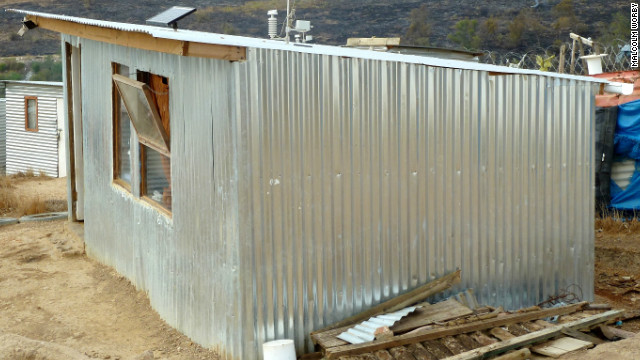
This is the iShack, which was developed by the University of Stellenbosch, where they were able to fund this experimental project using a grant from the Bill and Melinda Gates Foundation. It was developed to shelter families from the extreme temperatures in Africa as well as provide them with reliable power to sustain their lifestyles.

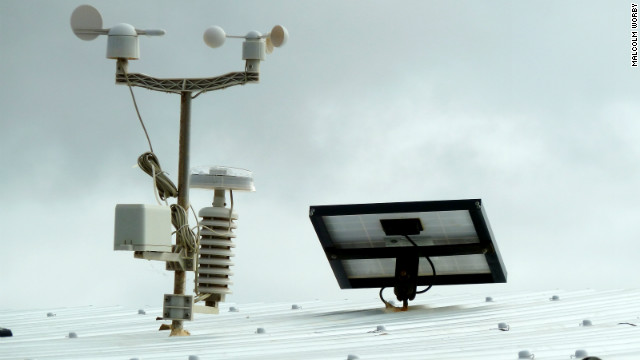
       This particular iShack is currently occupied by Plaatje, a domestic worker employed only once a week, and her three children. It is completely equipped with a photovoltaic panel, providing them with enough electricity to power three lights, a mobile phone charger and an outdoor motion spotlight. 


The structure of the iShack was carefully designed in that windows were placed strategically to provide them with better air circulation and sunlight heating as the roof was sloped to harvest rainwater during winter months. 

Upon living in the iShack, Plaatje and her three children claims that her lifestyle has improved drastically from where she used to dwell in, which was a cold, damp shack with a leaky roof and no electricity. Not bad of a transition for a family struggling as well as many others in Africa.

Saturday, February 9, 2013

African huts glow with solar power

KIPTUSURI, Kenya - Sara Ruto's yearn for electricity began with a purchase of her first cellphone for receiving money transfers, contacting relatives, or even calling nearby markets for the prices of chicken. However, powering her phone was no simple matter, due to the fact that there is no electricity to begin with in farming villages residing in Kenya. Therefore, Ruto walked 2 miles to hitch a 3 hour ride on a motorcycle taxi bound to Mogotia, the nearest town with electricity  to charge her phone for 30 cents. It doesn't end there; with such high demand of locals needing to charge their phones, Ruto has no choice but to leave her phone there for 3 days before returning home. However, Ruto's distressful routine ends in February when the family saves up their money as well as selling their cattle for a solar panel made from China costing them $80 but well worth the investment. The solar panel provides enough electricity to charge their phones and also running 4 overhead lights with switches. Ever since Ruto had hooked up her solar panel, her children of six drastically improved their school grades from having light in their home as well as avoiding burns from kerosene lamps.

Sara Ruto holds a small solar-powered LED light, part of a system that also charges cell phones, at her home in Kiptusuri, Kenya. Ruto, who used to travel miles to charge her mobile phone at the nearest town with electricity, purchased a solar panel for about $80 to charge her phone and power several lights.
Ed Ou / New York Times News Service


Thanks to this solar panel, Sara Ruto no longer takes a three-hour taxi ride to a town with electricity to recharge her cellphone.(Ed Ou/The New York Times)